


European Precision Meets Driving Pleasure: Research & Development Team Prepares smart #5 for Market Launch
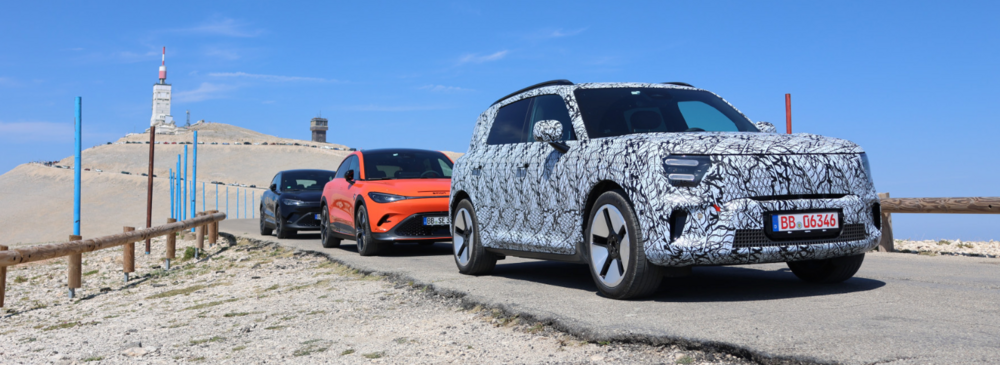
smart is fully committed to ensuring that each model is carefully tested. The European Research and Development (R&D) team therefore not only works on the mandatory tests, but also carries out additional, comprehensive tests to ensure that the vehicles meet the demanding European roads and traffic situations and its customers' needs.
In this context, we would like to take you with us and show you how and where our development department carries out the tests to ensure the quality and safety of each vehicle.
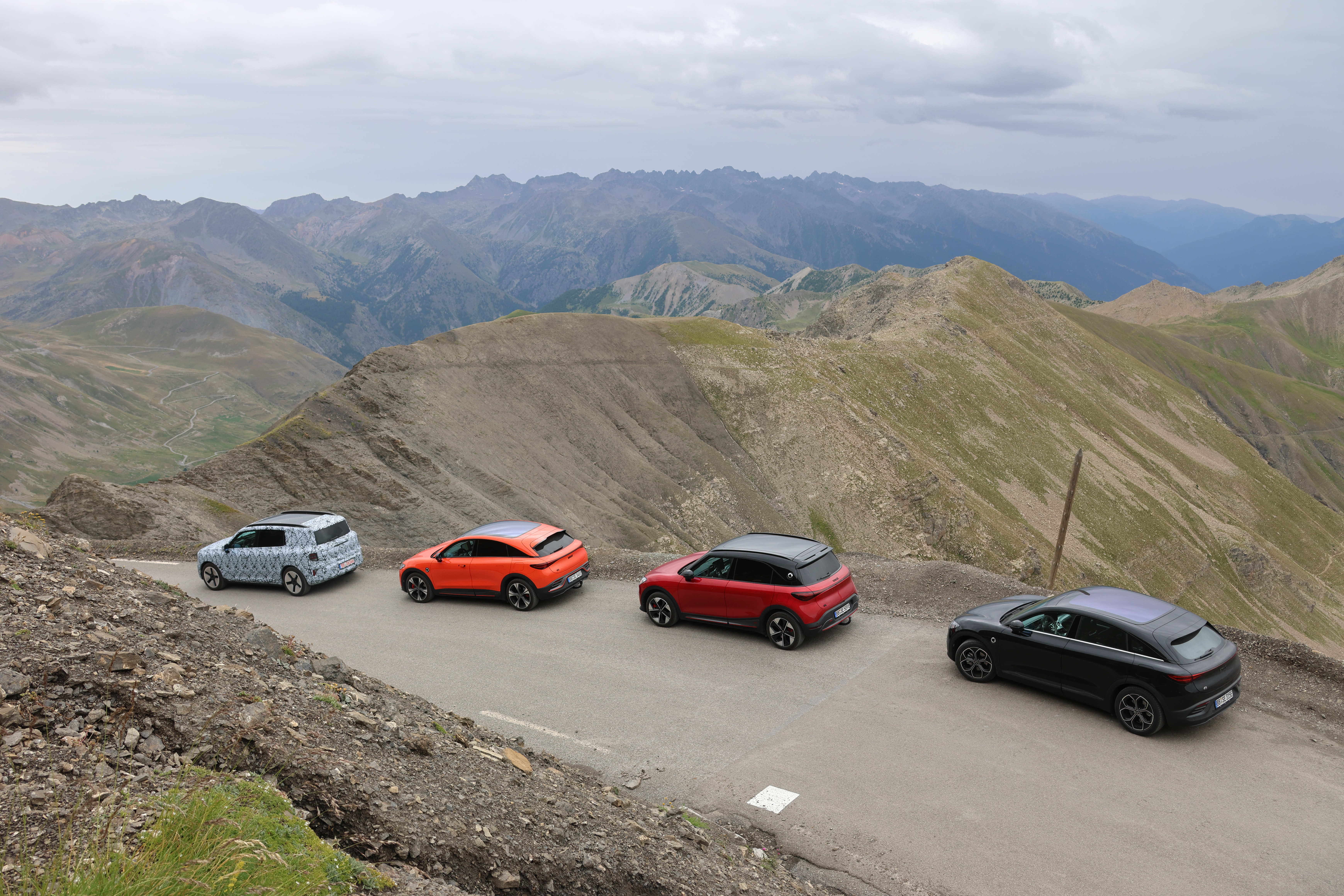
In mid-August, a team of seven experts from the European engineering team at smart, along with Dr Tilo Schweers, Vice President of R&D at smart Europe, set off from their headquarters near Stuttgart, Germany, with one smart #5[1], two smart #3s[2] and one smart #1[3]. The team headed towards France and drove up Mont Ventoux, which offers challenging conditions for reaching a major altitude difference from almost sea level to the peak at 1,909 meters – yet still at pleasant summer temperatures. After several ascents and descents, the team headed to Malaucène and from there via Cime de la Bonette, the highest paved pass in Europe, and Galibier for further assessment of the smart #5’s driving behavior on mountain routes back to Germany. This intensive period of less than a week on the road took place just a few days before the smart #5’s world premiere in Australia.
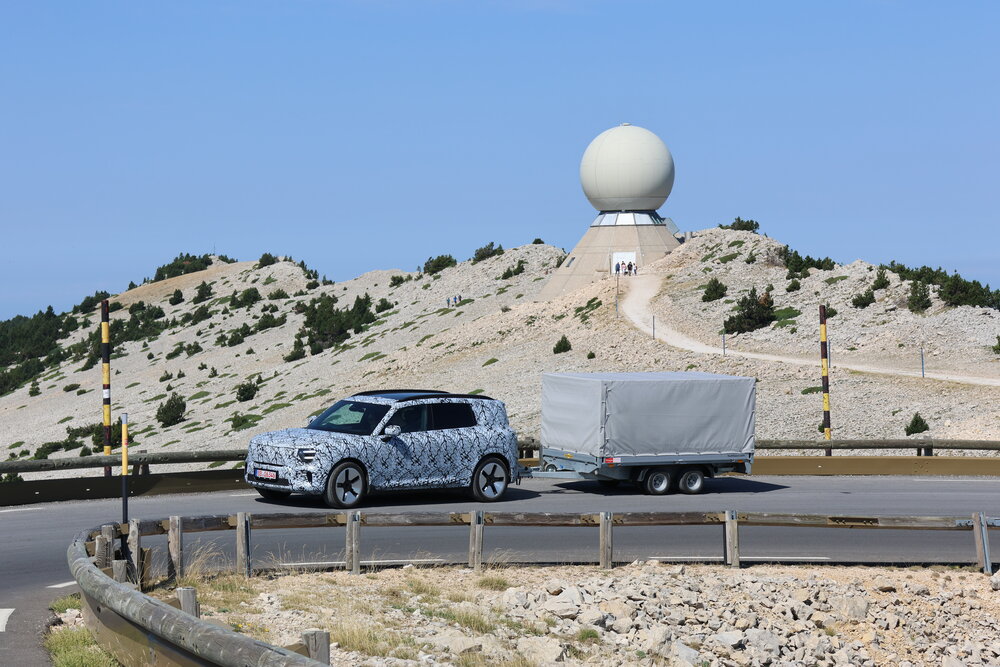
European roads are known for their different characteristics and winding routes that pose particular demands on the chassis and for maneuverability. This is precisely where smart’s European R&D team kicks in. With extensive driving in different terrain, the suspension set-up has been refined so that the car remains precise and safe even on winding and steep roads. The chosen test tracks provided everything the vehicle testers needed at this late point of the smart #5’s overall development prior to its market launch in Europe.
All relevant aspects were assessed in intensive test phases to ensure that the smart #5 is equipped for the complex conditions of driving on European roads. General vehicle performance was evaluated, including performance on mountain terrain and behavior under higher motor and battery temperatures, both with and without a trailer. The vehicle's response while towing a trailer (both braked and unbraked), charging capabilities, and various dynamic driving maneuvers – such as braking, ESP setup, motor torque restrictions, and cornering – were also carefully tested.
For many European customers, towing ability and capacity is an important criterion when buying a passenger car. The smart #5 has therefore been specially optimized for these requirements. The tests with an unbraked trailer confirmed that the vehicle delivers consistent and reliable performance even under heavy loads. The robust engine performance and stable driving style, even on steep downhill gradients as well as on winding and uneven roads, make the latest addition to the all-electric smart product portfolio an ideal companion for all those who are often on the road with a trailer in Europe.
The smart #5 also confirmed its qualities in intensive brake tests, which included emergency braking on steep descents to show potential brake fading. Even at a speed of 100 km/h, a trailer load of 750 kg (unbraked) and a gradient of 12%, the vehicle was brought ten times to a safe and controlled stop. These tests confirm the high quality and reliability of the braking system, which works well under all conditions – with or without a heavy load.
We are satisfied with the performance of the smart #5 at this stage of our road tests. Despite challenging road conditions, numerous bends and differences in altitude, the vehicle performed as expected over the entire route in France and Germany. The smart #5 is proof of how much fun, flexibility, and freedom electric mobility can be even beyond the urban centers and in more rural and mountainous areas.Dr. Tilo Schweers, Vice President R&D smart Europe
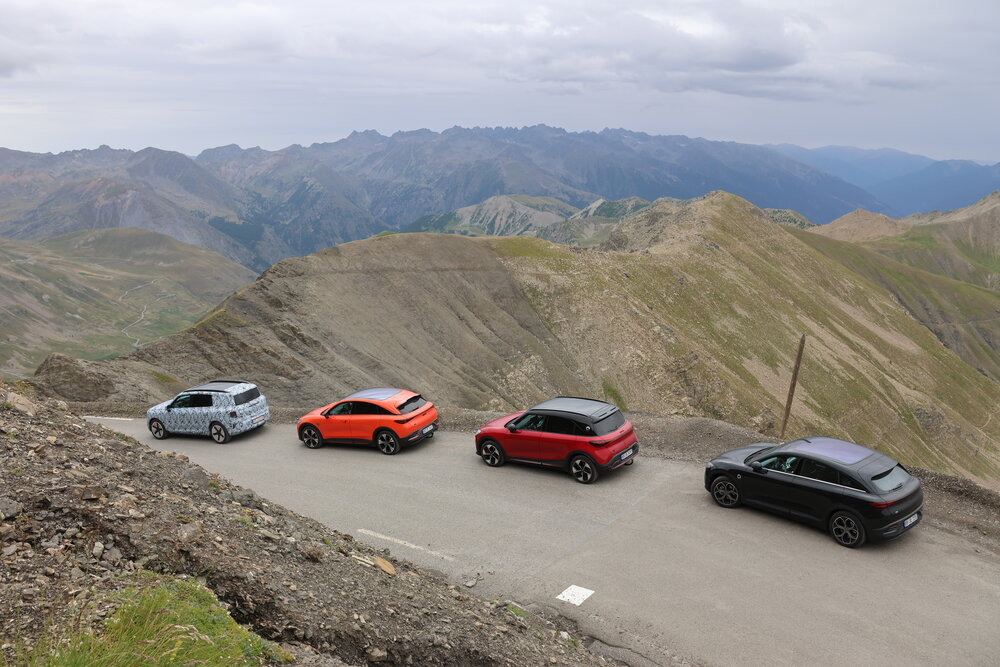
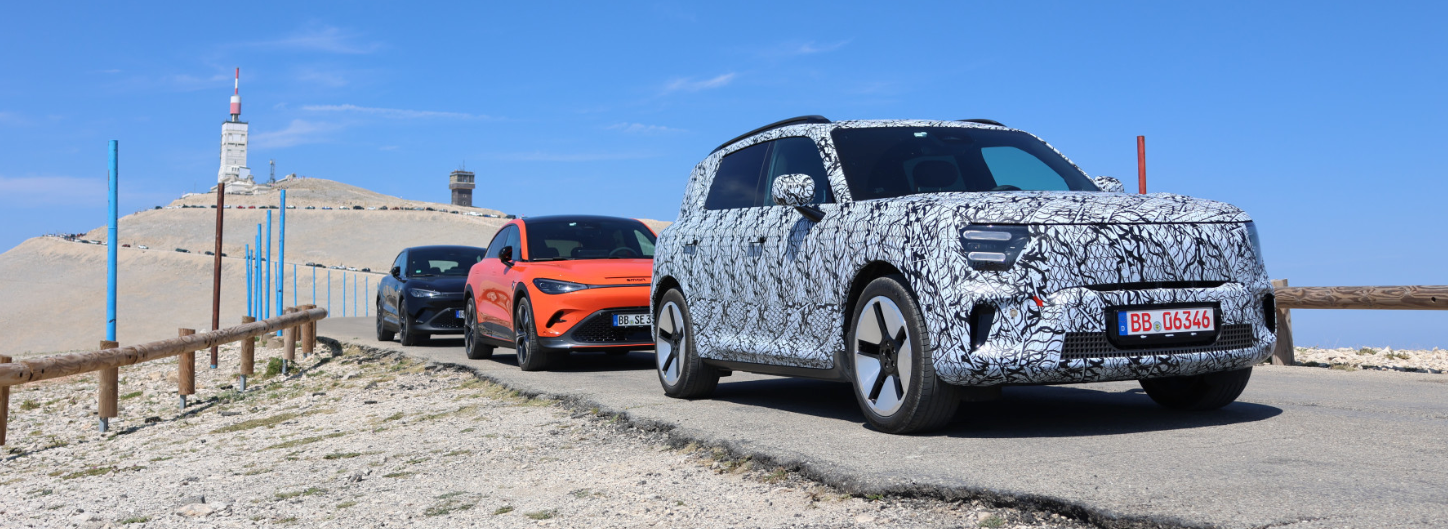
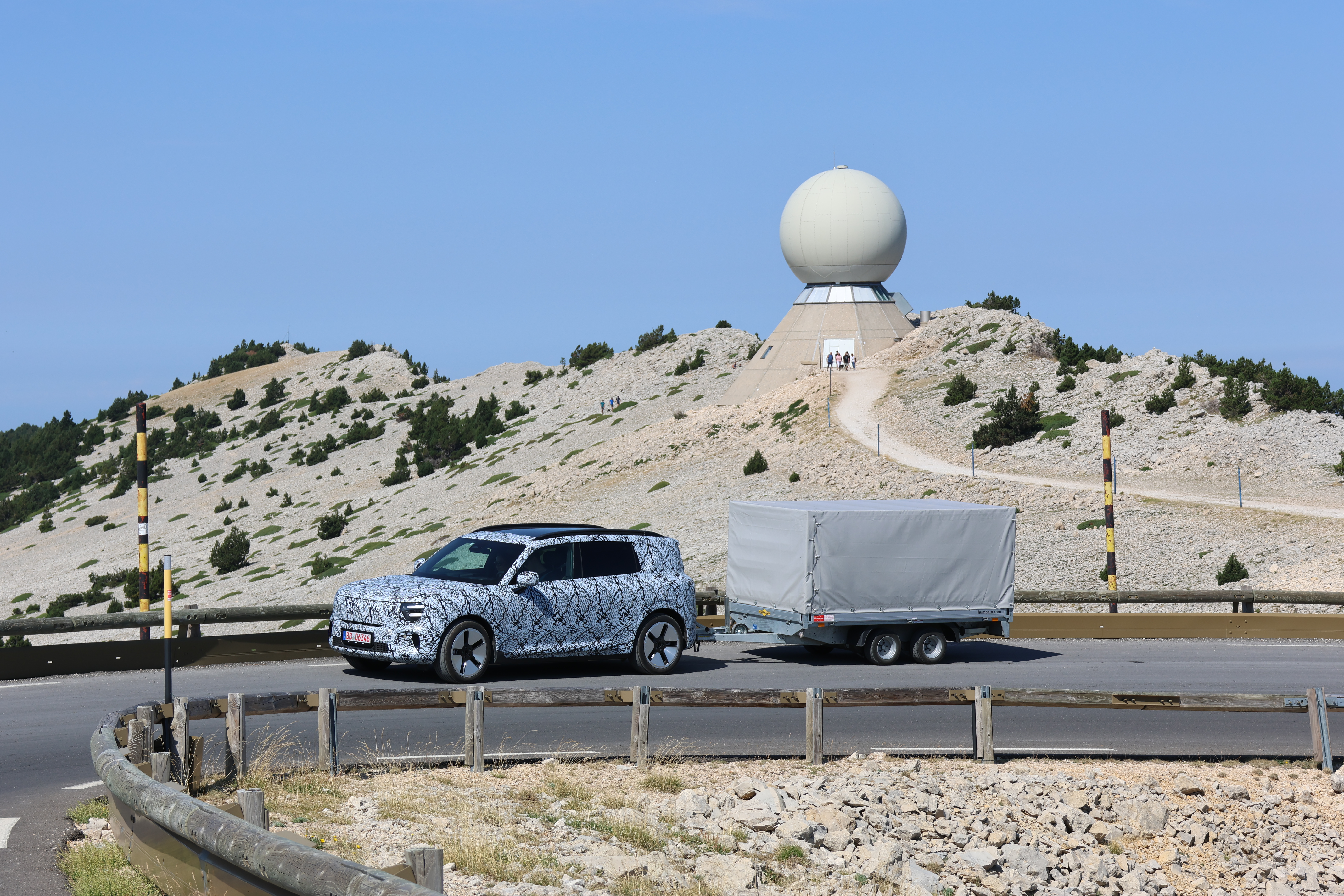
Long journeys with changing altitudes and temperatures place a particular strain on the electric motor and traction battery. During the trip in central Europe, the thermal load of the smart #5 drive system was put through its paces in extensive tests. The team drove up and down the mountain several times with a maximum trailer load of 1,600 kg (braked) and the component temperatures were checked: “We were impressed by the results. Because even under high load while we drove up and down the mountain in the French Provence several times, the electric motor performance and battery temperature remained stable with good values,” Dr Schweers explained. “Long distances under heavy loads, as often encountered on European terrain, will be no problem for the smart #5.”
The successful testing of the vehicle under these conditions and the associated collection of important data for the further final stretch of research and development of the European smart team was a great success. This test drive underscores smart's commitment to carefully and intensively test and adjust its vehicles to certain demands in market regions to prove customers with the best possible products and services.
With further tests planned, including winter tests in the north of Scandinavia, the smart #5 is on track for its European launch early next year. The smart Europe R&D team’s conclusion is clear: Future customers of the smart #5 in Europe can look forward to a robust, safe and comfortable vehicle that will excel in even the most demanding situations.
1The vehicle is in the EU homologation process. smart will publish the official values through its usual channels as soon as the homologation process is completed.
2Combined energy consumption in kWh/100 km (WLTP): 16.3 (Premium/25th Anniversary Edition), 16.8 (Pro+), 17.2 (Pro), 17.6 (BRABUS/Pulse); combined CO2 emissions (during the operation of the vehicle) in g/km (WLTP): 0; CO2 efficiency class: A; electric range (WLTP) in km: 415 (BRABUS/Pulse), 455 (Premium/25th Anniversary Edition), 435 (Pro+), 325 (Pro).
3Combined energy consumption in kWh/100 km (WLTP): 16.8 (Premium), 17.4 (Pro+), 18.1 (Pro), 18.2 (BRABUS/Pulse); combined CO2 emissions (during the operation of the vehicle) in g/km (WLTP): 0; CO2 efficiency class: A; electric range (WLTP) in km: 400 (BRABUS/Pulse), 440 (Premium), 420 (Pro+), 310 (Pro).