


5,000 kilometers, 13 days and 4 cars – with smart Europe’s Research & Development team through varied landscapes from Stuttgart to the North Cape

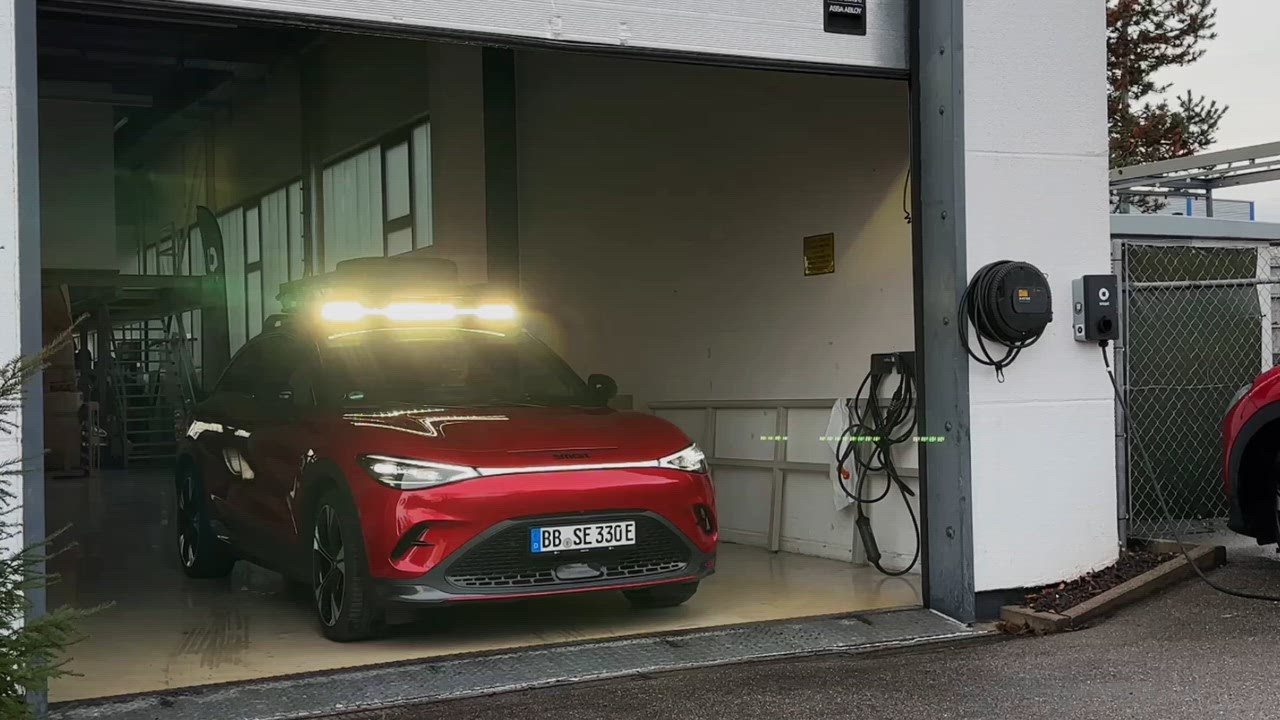

Reuniting in Stuttgart on February 3, we spoke with Dr. Tilo Schweers, Vice President of R&D at smart Europe GmbH, to gain insights into the expedition’s challenges and unique experiences encountered during this extraordinary journey.
The most noticeable difference is the need for more frequent stops. However, a major advantage of traveling with an electric car is that the battery lasts at least a day if you get stuck, as the consumption while you are forced to stand somewhere is about 2% per hour just for heating, for example.
The aesthetic element also plays a role. Cruising through breathtaking landscapes is more enjoyable in a quiet and visually appealing electric vehicle. In such scenic locations, where tourists sometimes engage in noisy winter sports that can harm nature, opting for an EV aligns perfectly. It integrates seamlessly with the clean and picturesque environment, leaving it untouched and undisturbed, a distinct advantage of electric vehicles.
2. As an owner of an electric car preparing for a journey, especially one to a destination like the North Cape, what hurdles might you encounter?
Effective preparation is paramount on such journeys. Ensure you pack essentials such as blankets, food, water, a spare wheel, snow chains or spikes, and other necessary items. It is crucial to rely on the information provided by road maintenance authorities and stick to designated, accessible routes for a safe and trouble-free drive.
There is often apprehension about elevated energy consumption when charging electric vehicles in cold weather. However, contrary to the common expectation of a 50% or higher increase in consumption during winter driving, our experience contradicted this assumption. Throughout the journey, we noticed only an approximately 25% rise in consumption compared to trips in warmer temperatures, including the fact that two of the four vehicles were equipped with roof racks and the need to heat extensively.
In such conditions, it is crucial to acknowledge that the nearest charging station may not be operational. Moreover, roadblocks could be encountered. To err on the side of caution, it is advisable not to let the car’s battery level drop too low, ideally maintaining it at least half full. These precautions apply to rural areas and to less remote locations where roadblocks can still occur.
Something that made a lasting impression on the R&D team on this trip was the helpfulness of the local people. During the snowstorm, the team came across a roadblock, which was lifted so that the team could reach their destination safely. With a visibility of five meters, this was no easy task. In a climate like this, the weather is unpredictable. You have to be prepared to give up and turn back. But no matter who our team encountered; help was always there. People are good-natured, helpful and hospitable.




*smart #1 : Electricity consumption combined in kWh/100 km: 18.2 (BRABUS/Pulse), 16.8 (Premium), 17.4 (Pro+), 18.1 (Pro) ; Combined CO2 emissions in g/miles | g/km: 0; Electric range (WLTP) in km: 400 (BRABUS/Pulse), 440 (Premium), 420 (Pro+), 310 (Pro). ** smart #3 : Electricity consumption combined in kWh/100 km: 17,6 (BRABUS/Pulse), 16,3 (Premium),16,8 (Pro+), 17,2 (Pro) (WLTP); CO2 emissions combined in g/km: 0; Electric range (WLTP) in km: 415 (BRABUS/Pulse), 455 (Premium /Edition), 435 (Pro+), 325 (Pro). The Pulse Line is in the EU homologation process. smart will publish the values after expected completion in early 2024 through its usual channels. The charging time of the battery may vary depending on various conditions such as different ambient and battery temperatures, available power and other restrictions, as well as the use of the remote control function (e.g. remote controlled air conditioning, preheating of the vehicle, etc.). With a 3-phase power supply, you can charge at up to 22 kW and go from 10% to 80% SOC (State of Charge) in just 3 hours under optimal conditions (except with the Pro, which is only available with 7.4 kW onboard charger and requires 5.5 hours to do so). With a DC fast charging station, you can even charge at up to 150 kW (Pro: 130 kW) and go from 10% to 80% SOC in 30 minutes under optimal conditions. For charging with AC plugs, smart recommends charging the high-voltage battery at industrial sockets, at public charging stations or at a wallbox. This achieves a higher efficiency and a significantly shorter charging time compared to charging at a household socket.