
6 p.m., October 1996, Paris. The Louvre has just closed its doors. Inside, the galleries fall quiet. Outside, the evening is only beginning. In the space of a single hour, the square in front of the iconic landmark is transformed. Clean, neutral backdrops rise against the historic architecture, creating an almost surreal contrast between old and new. There is no elaborate stage, no spectacle to distract the eye. Everything is deliberately pared back to a single focal point: a small, unconventional two-seater standing at the centre of it all.
The concept vehicle appears almost like an unfinished sculpture – raw, purposeful and unlike anything else on the Parisian streets. Under the evening lights, its compact proportions hint at a different idea of mobility: one shaped not by the conventional rules of the automobile, but by the realities of the city.
Here, in front of one of the world’s most iconic buildings, the first glimpse of a completely new vehicle class is about to be revealed. Word has already spread among journalists, and around 50 guests are expected to attend. Instead, the evening draws roughly 1,000 curious guests, far beyond what anyone had anticipated.
The response is an early sign that this is more than the unveiling of just another car. The idea of a radically different two-seater has captured people’s attention before they have even seen it up close. It is an idea that would challenge not only what a car could look like, but what a car actually needed to be in a city.
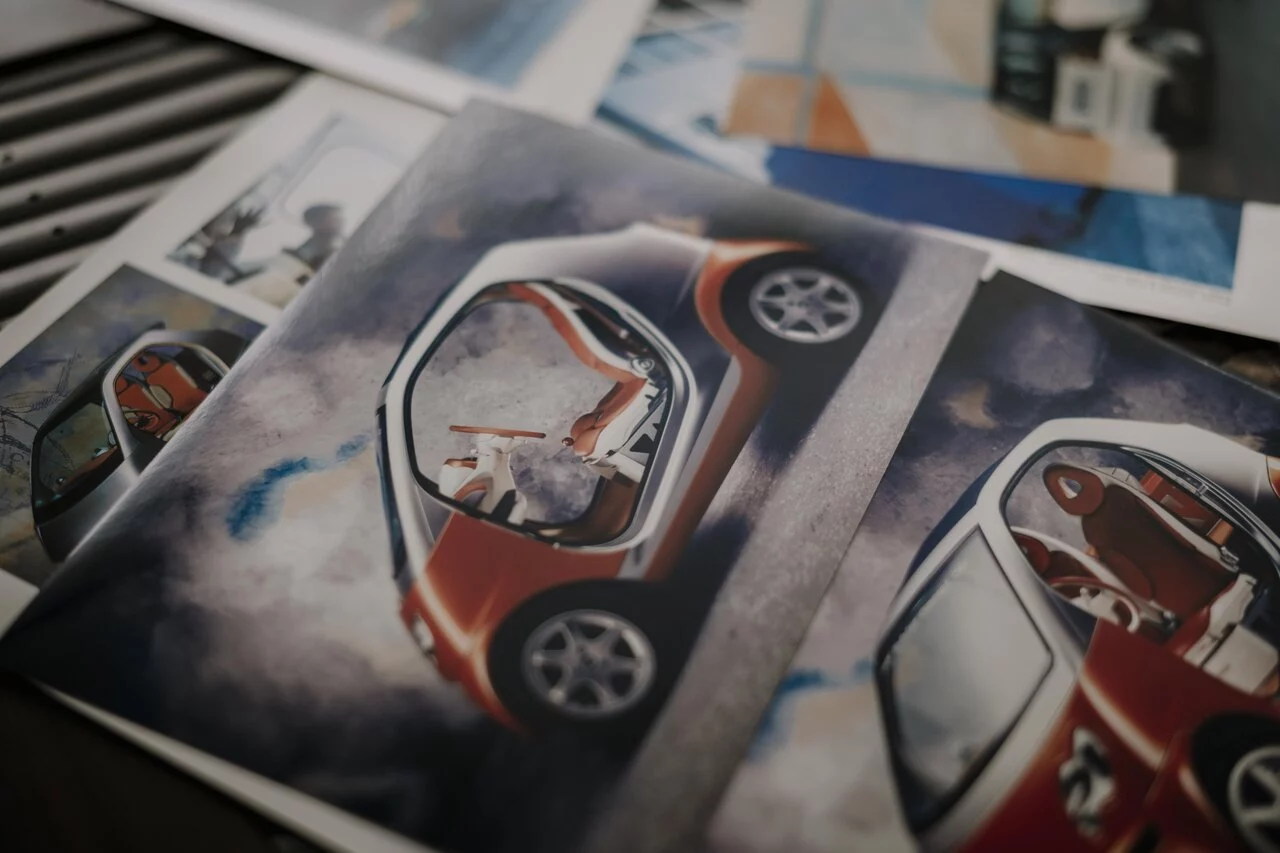
jpg
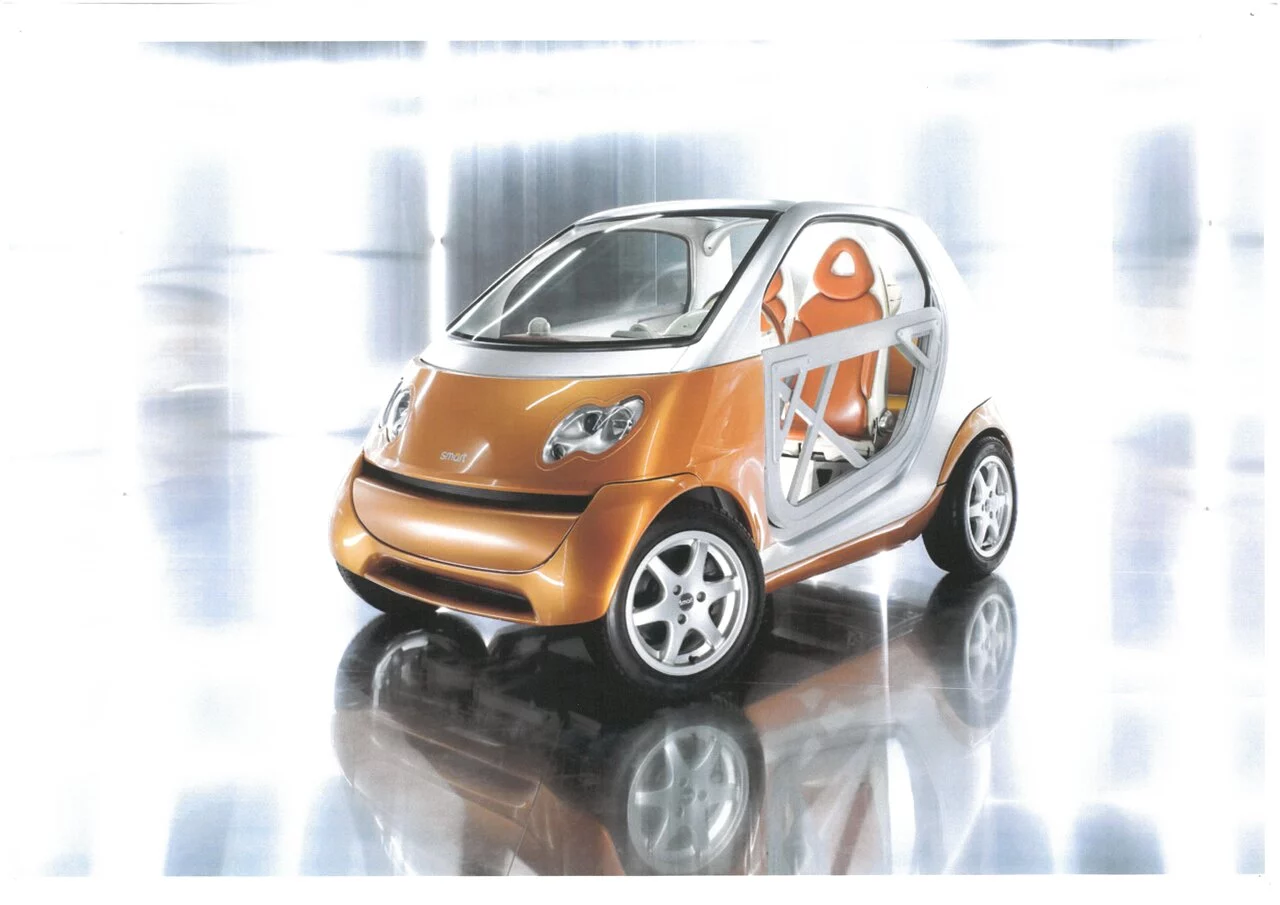
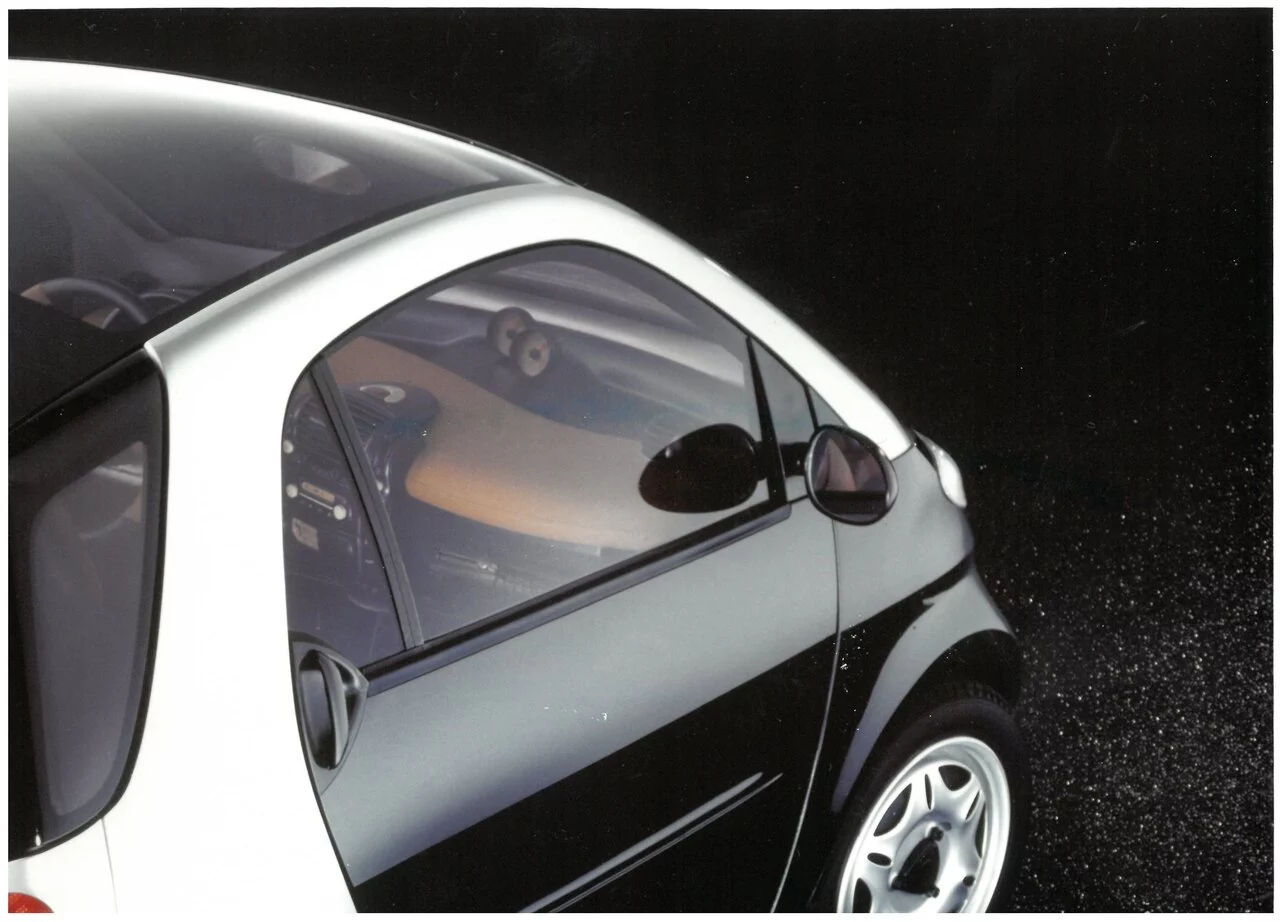
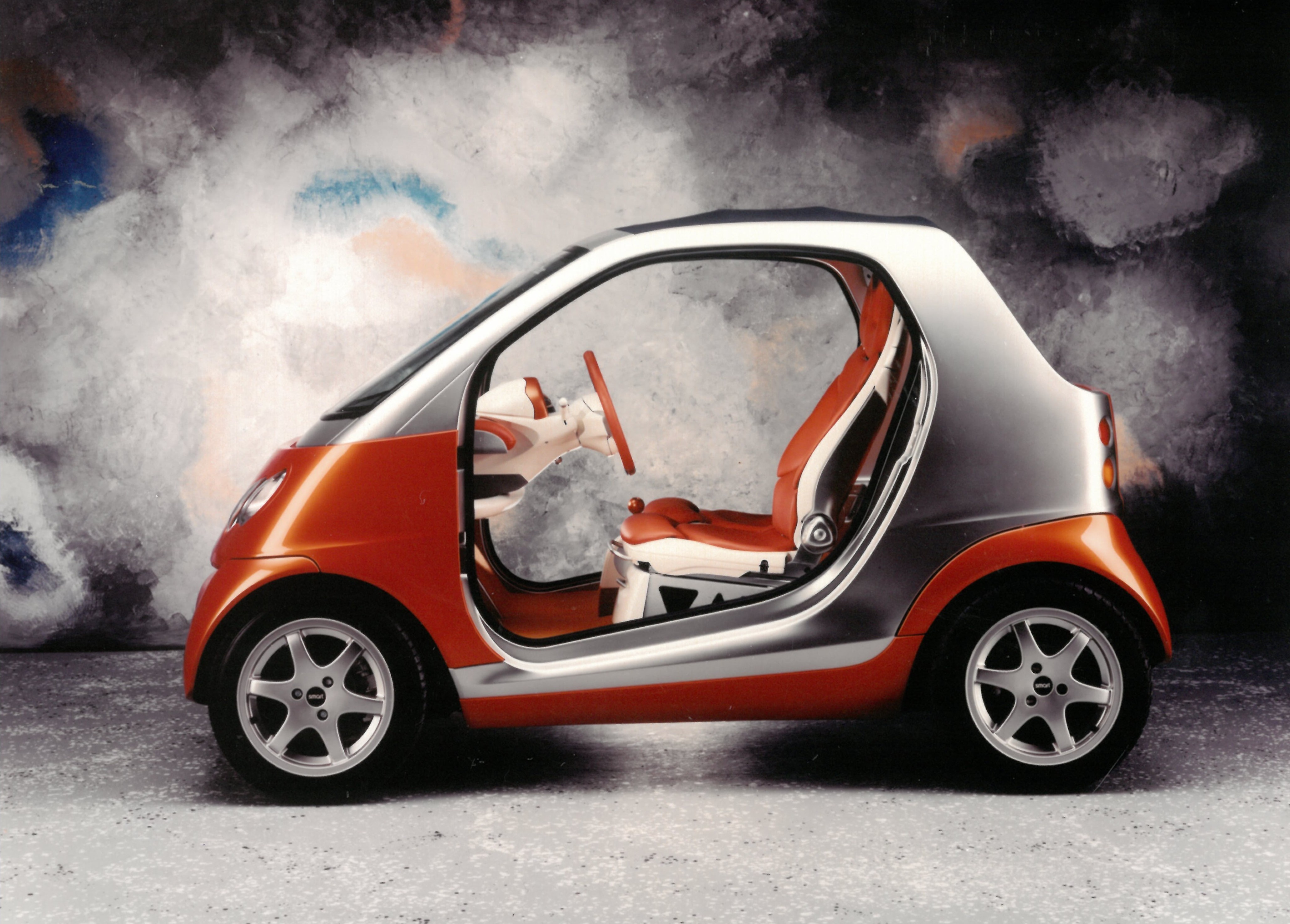
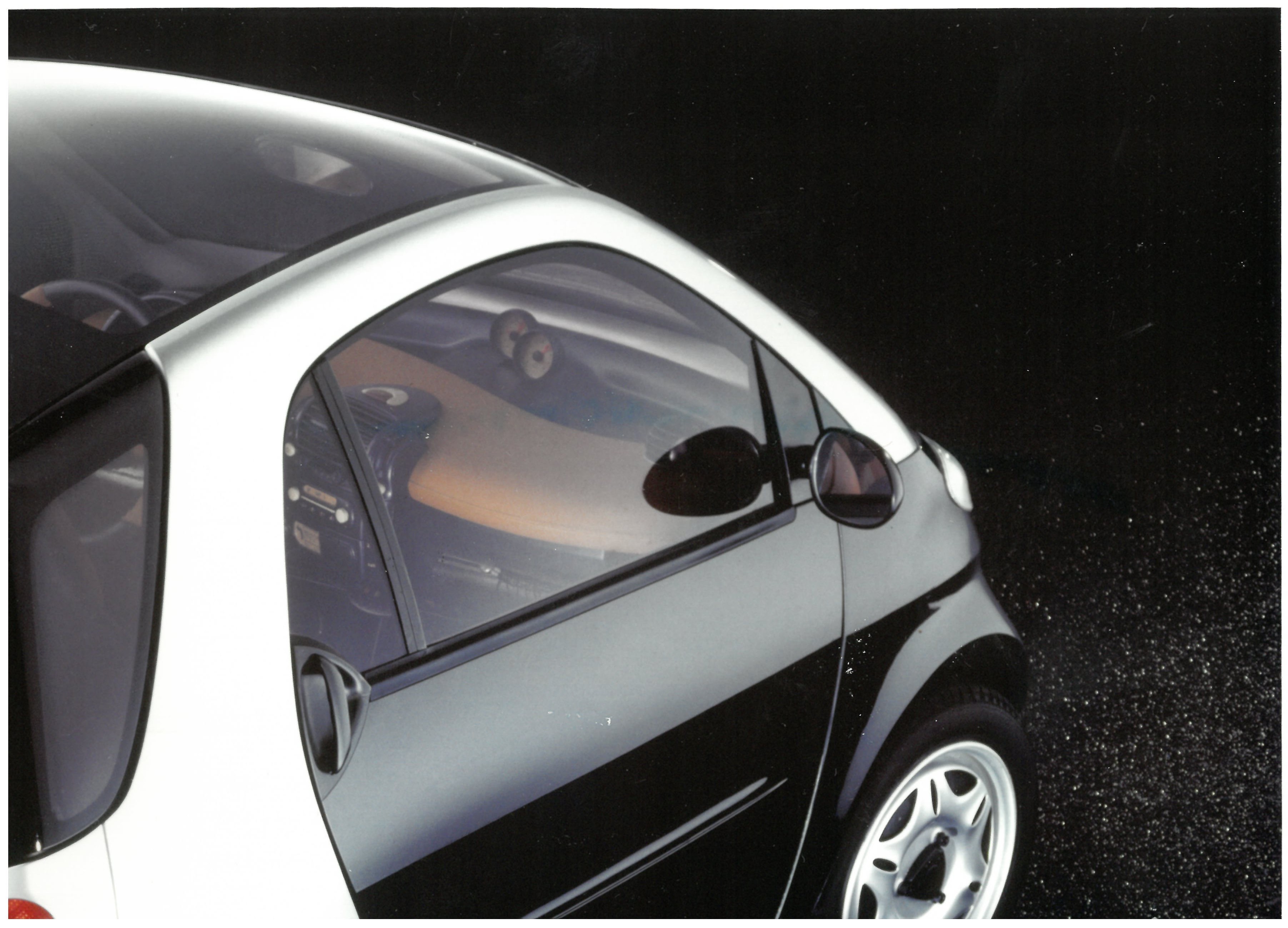
Press footage of the smart concept car presented in Paris, autumn 1996. Its silver safety cell, later known as the Tridion cell, and contrasting coloured body panels made the car's structural principle visible for the first time, a design signature that would define the smart fortwo. Source: smart
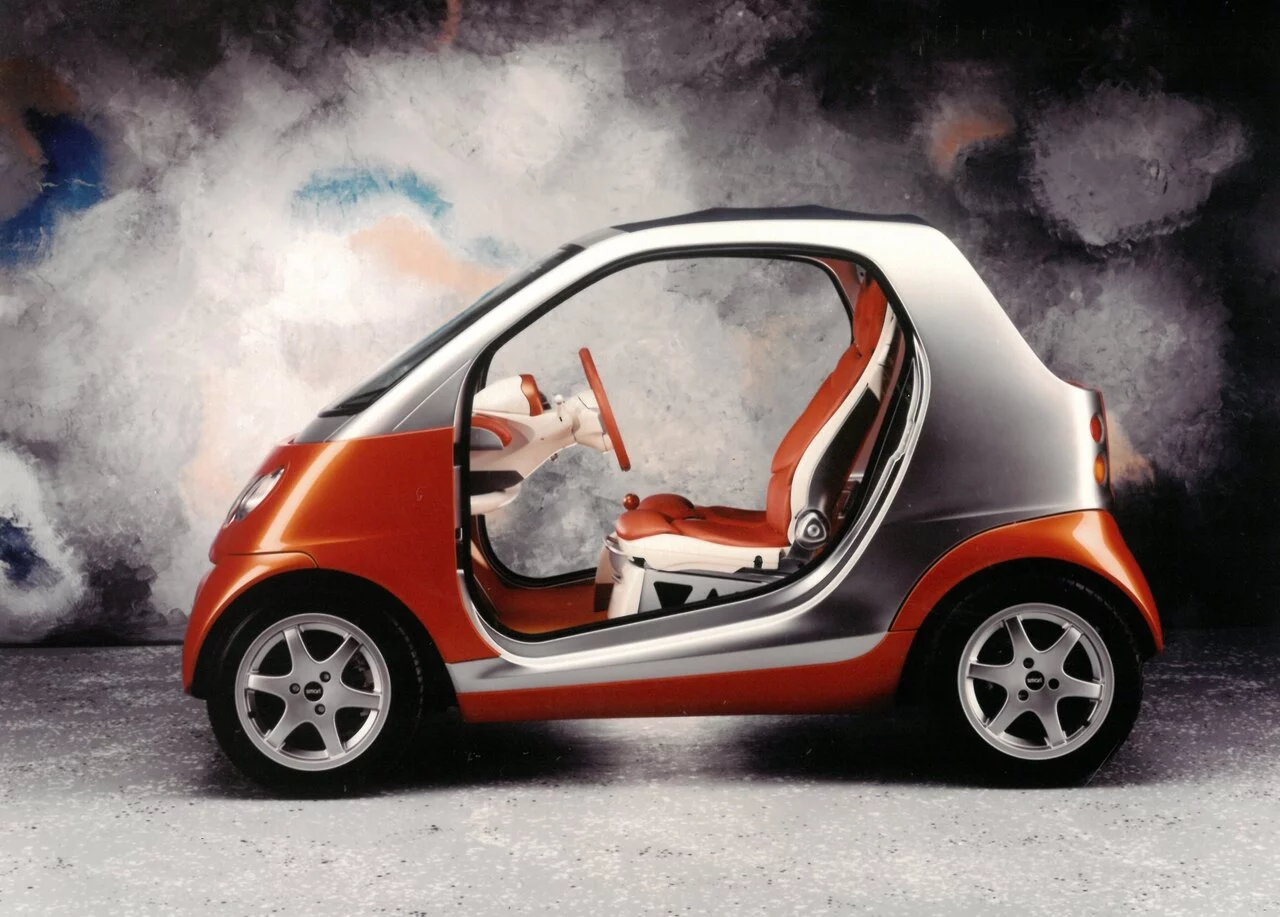
jpg

The smart concept car photographed in front of the Louvre in Paris in autumn 1996. Its exposed silver safety cell and contrasting body panels already introduced the structural and visual principles that would later define the smart fortwo. Source: Mercedes-Benz Classic
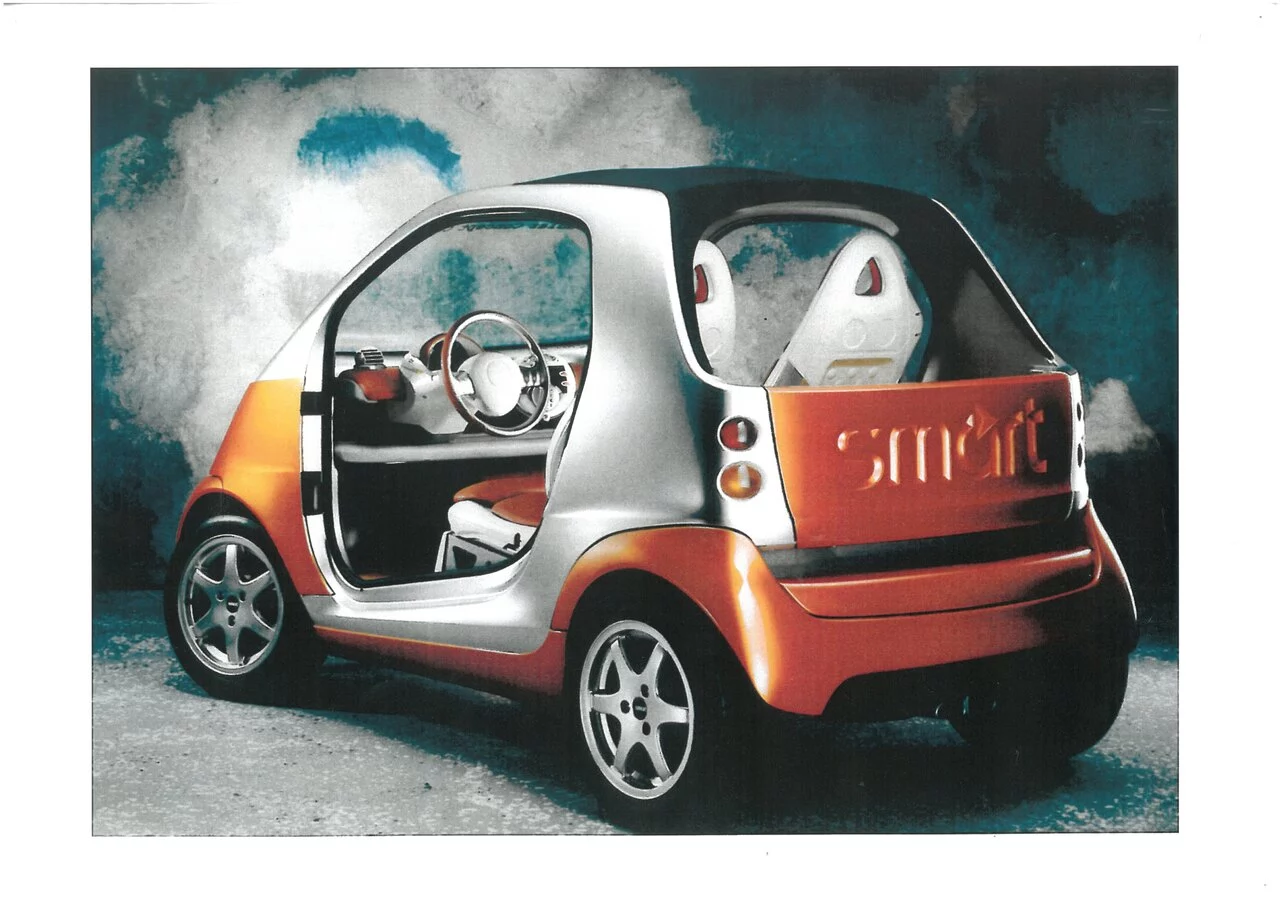
jpg
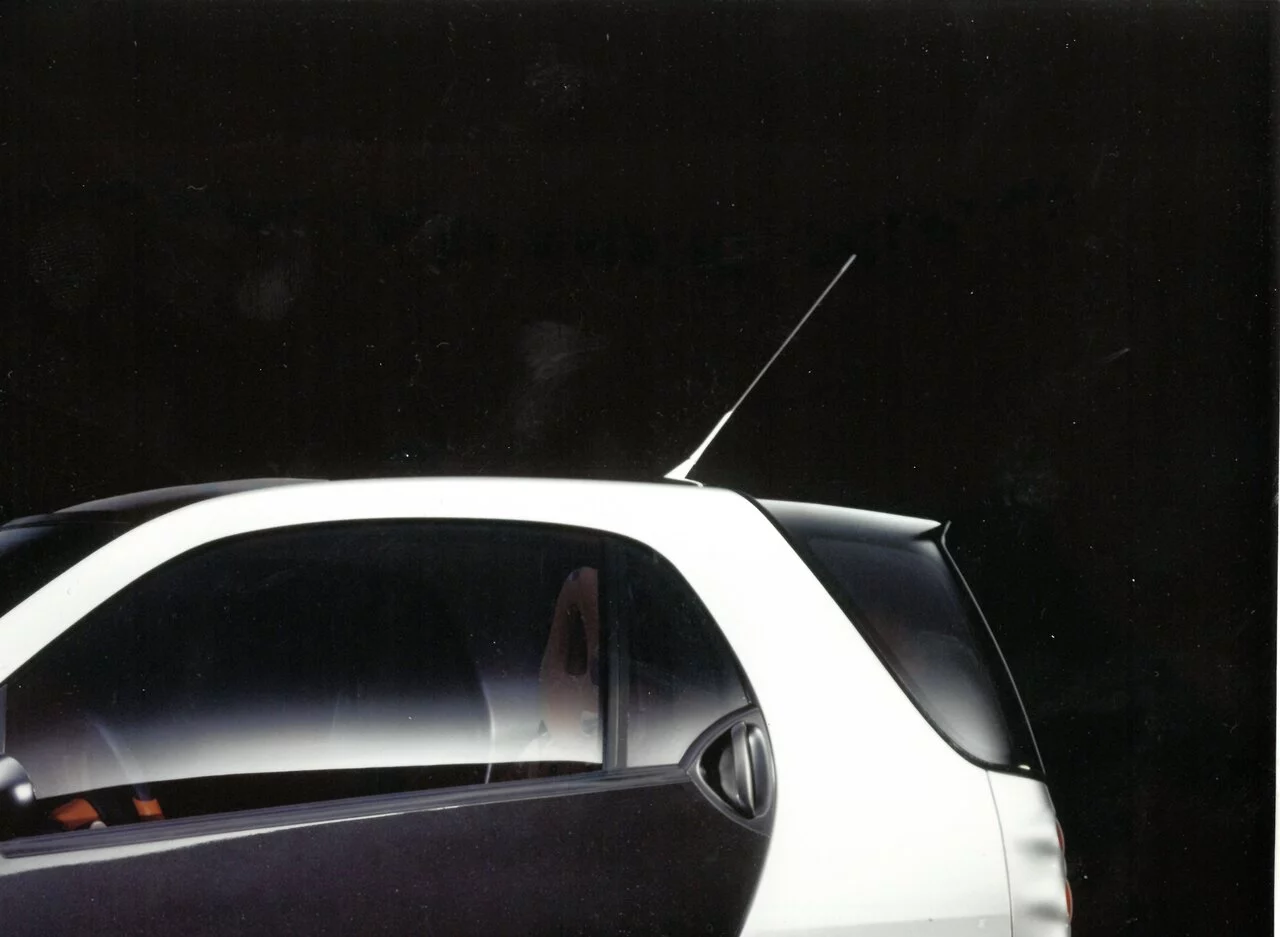
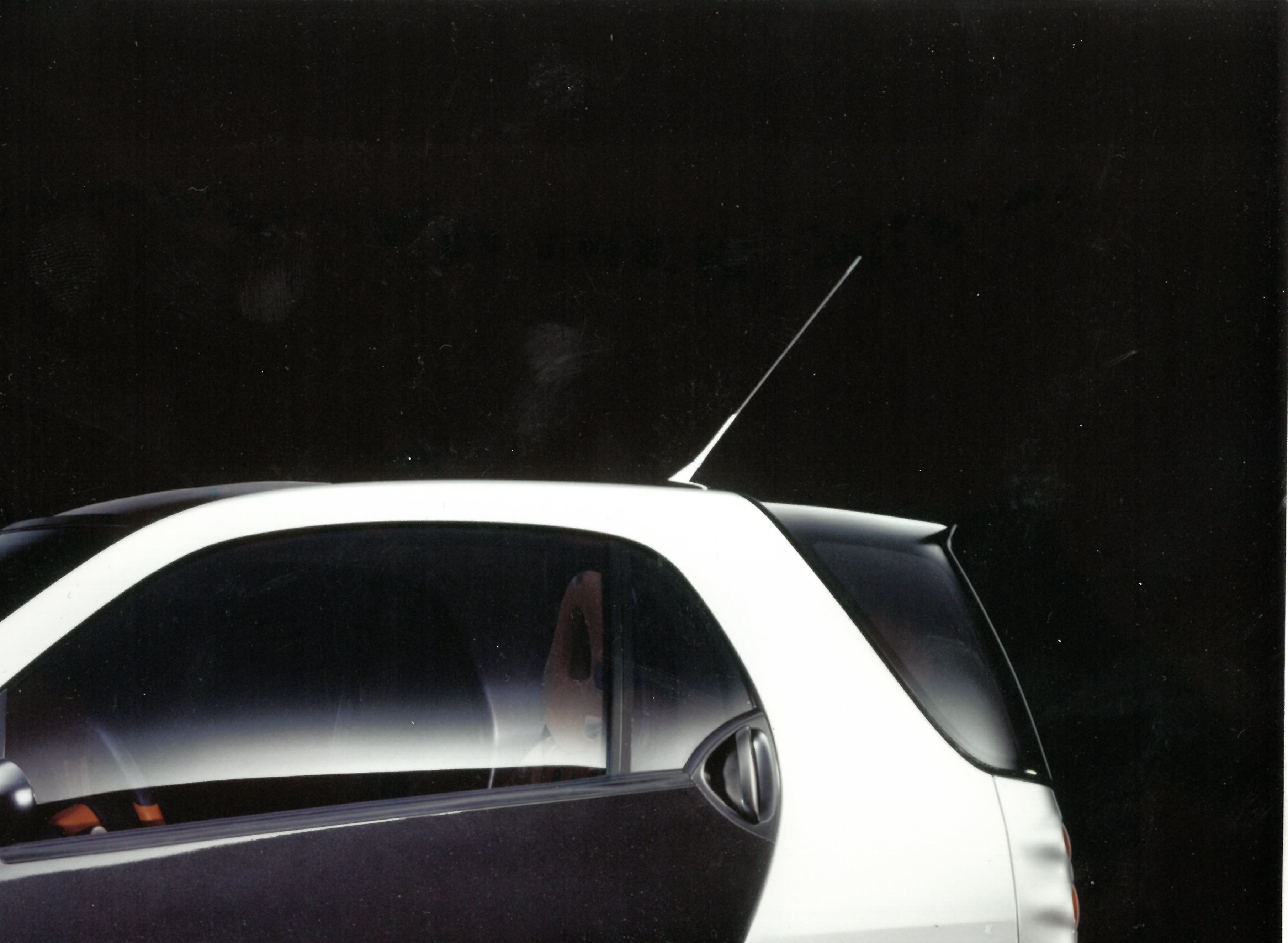
Rear view of the smart concept car during the 1996 photo shoot at the Louvre. The open bodywork, compact proportions and distinctive two-tone design presented the unconventional two-seater as an automotive sculpture. Source: Mercedes-Benz Classic
Anyone who wants to understand the story of smart cannot get past one name: Prof. Johann Tomforde. In the 1970s, the designer and engineer developed the original idea for a small, safe, and all-electric city car and shaped the development of the smart brand at Mercedes-Benz over many years.
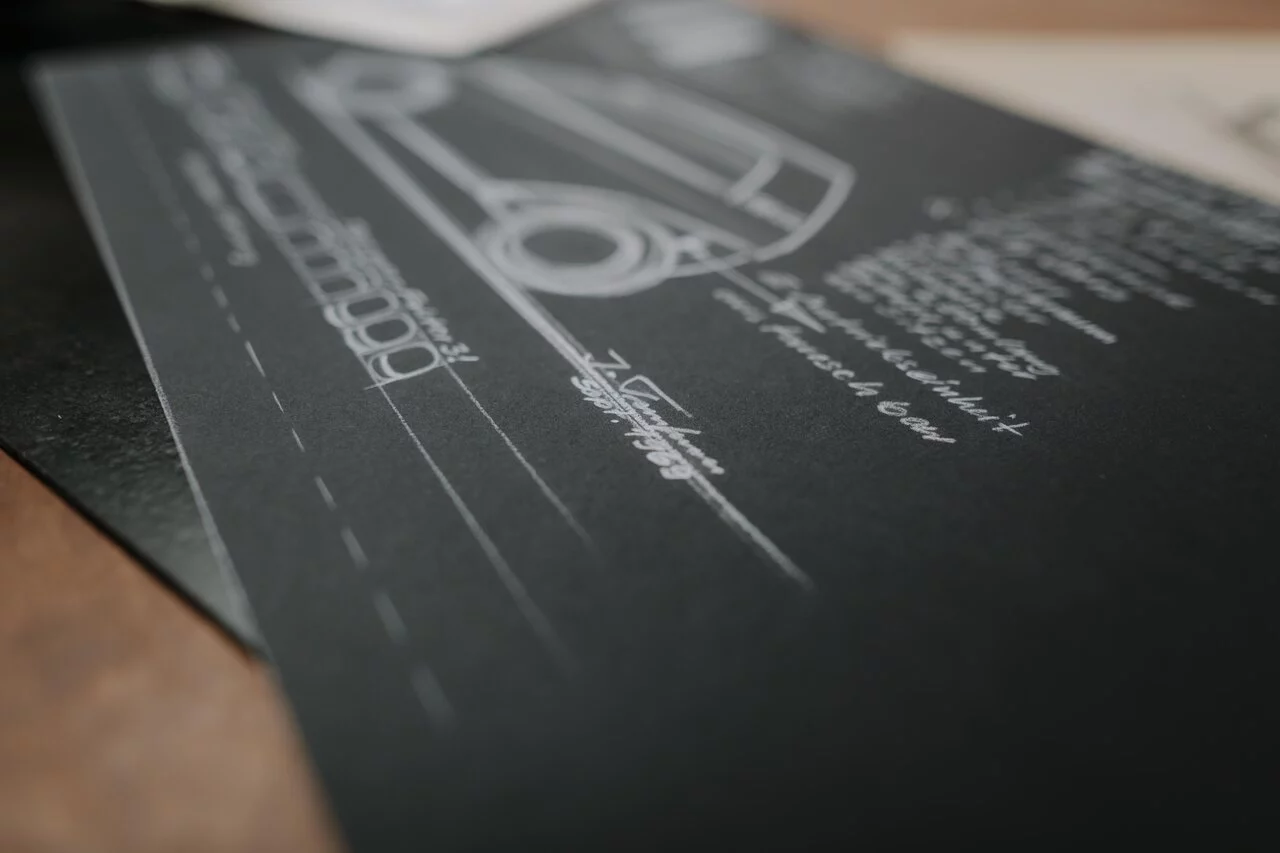
jpg
jpg
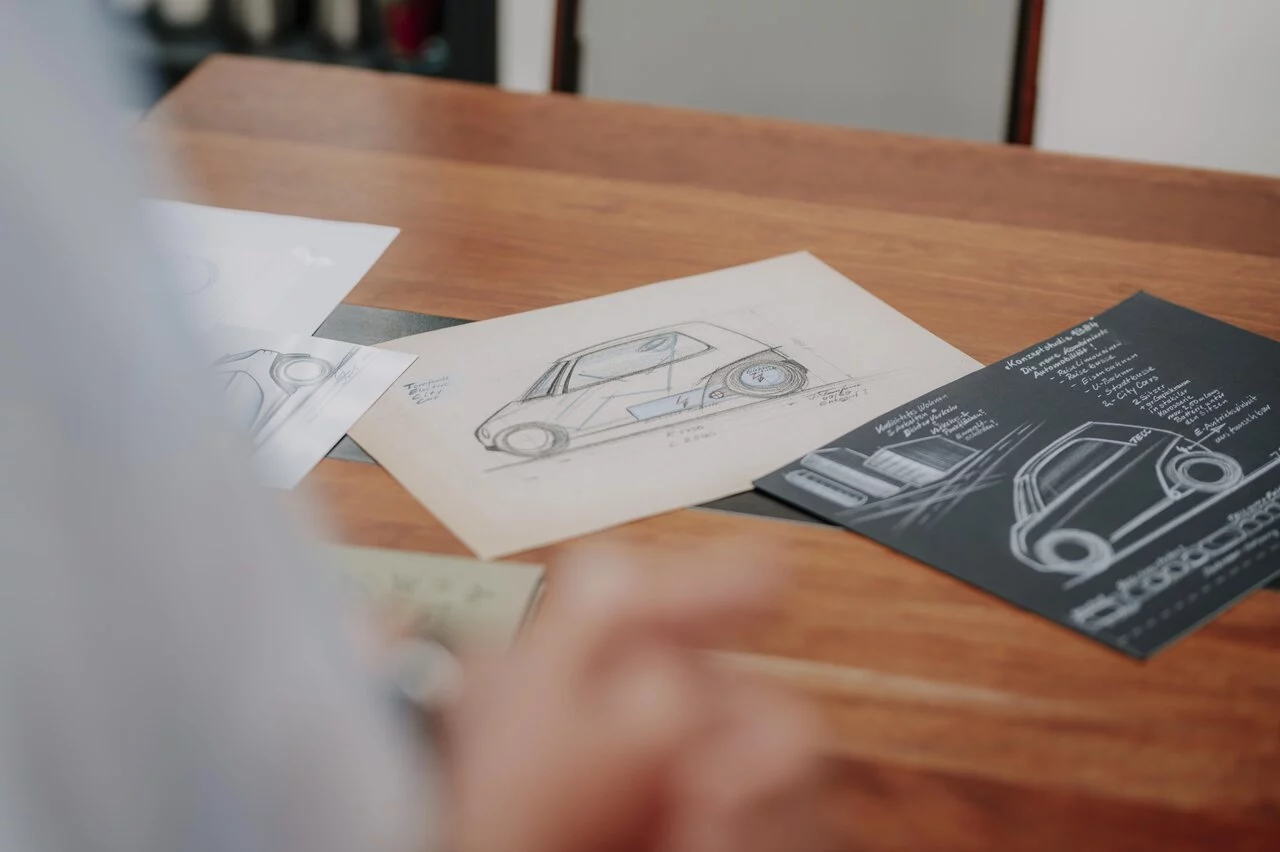
Sketches and notes from Johann Tomforde's student years, showing the concept he proposed to his professor as a topic for his thesis: a compact two-seater city car. His professor turned the idea down, so Tomforde never wrote the thesis. Little did anyone know what it would later grow into. Source: smart
Just ahead of the world premiere of the new smart #2 at the Paris Motor Show in autumn 2026, he looks back on that evening event at the Louvre 30 years ago – the starting point for the global phenomenon that smart became. The young smart team had no budget planned for an own press conference at the Paris Motor Show; but a small corner of the Mercedes-Benz stand was available. So, a different plan took shape.
The PR stunt was built on a small budget, little preparation time, and with enormous creativity. We staged the show car to create the feeling of it being an unfinished automotive sculpture right in front of the Louvre, which is the most artistic place in Paris. With the unusual colour and material concept of the concept, you could see that smart was never about to present just another car. It was positioned as a work of art, a lifestyle object.
Johann Tomforde
The next day, when the Mondial de l’Automobile de Paris opened its doors, the small smart area was packed. Paris has realised that something bigger than just another new car has emerged here. A new perspective on mobility is born.
According to Johann Tomforde, that night in Paris established an idea that has remained at the heart of smart ever since: challenging established conventions through a combination of innovative engineering and distinctive design. This combination continues to shape how the brand is perceived today.
It also reflects the expectations of a new generation of urban drivers. They ask for advanced technology and functional solutions, but their choice of mobility is not purely rational. Design, individuality, driving experience and a more conscious use of resources matter just as much. Bringing these needs together is what sets smart apart from the beginning. It made the brand an original in a new category of urban mobility – and remains the principle that connects its origins with the smart of today.
jpg
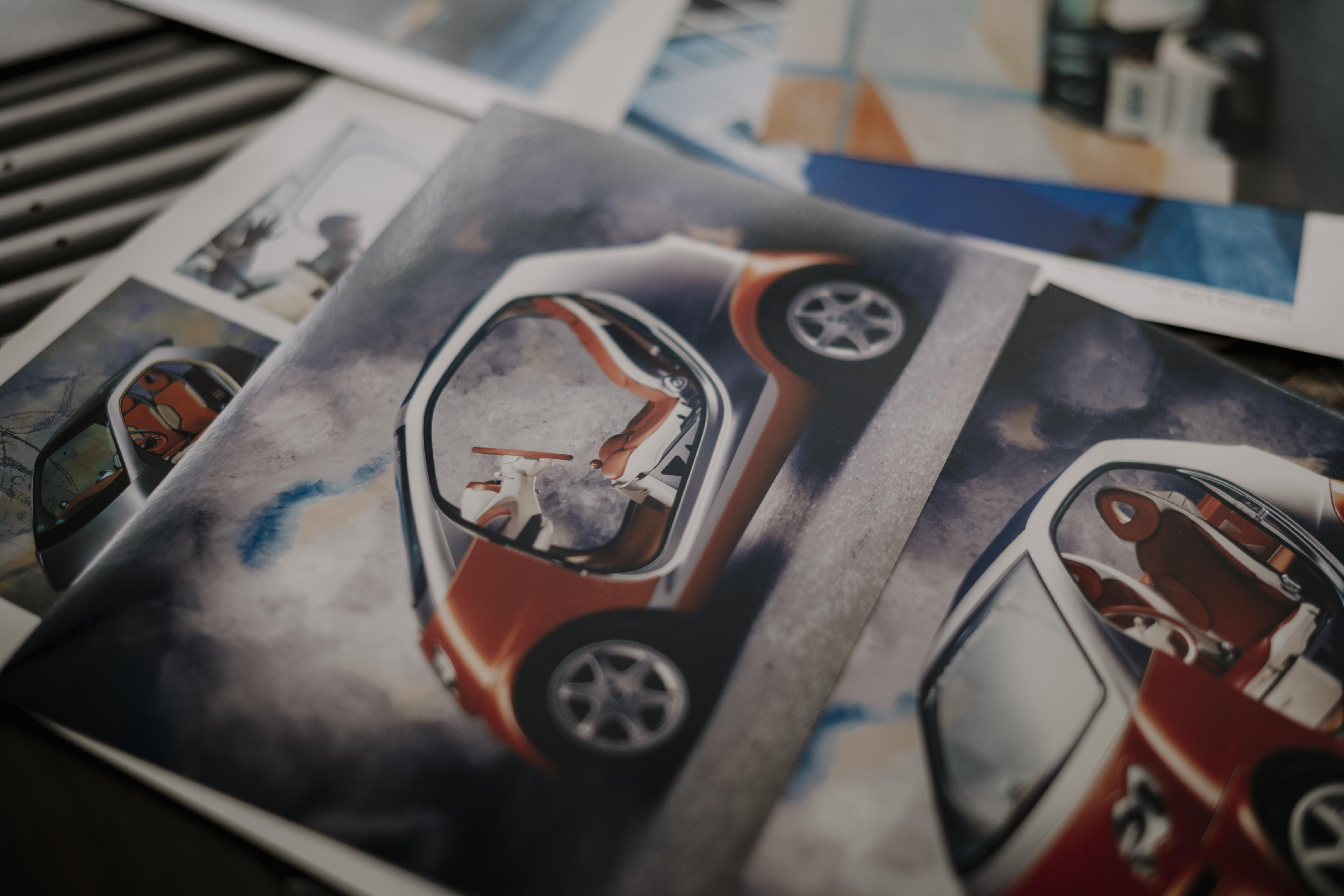
Johann Tomforde today, leafing through a book of historic smart images. As one of the founding fathers of the smart story, he still holds much of that history close. Source: smart
jpg
jpg
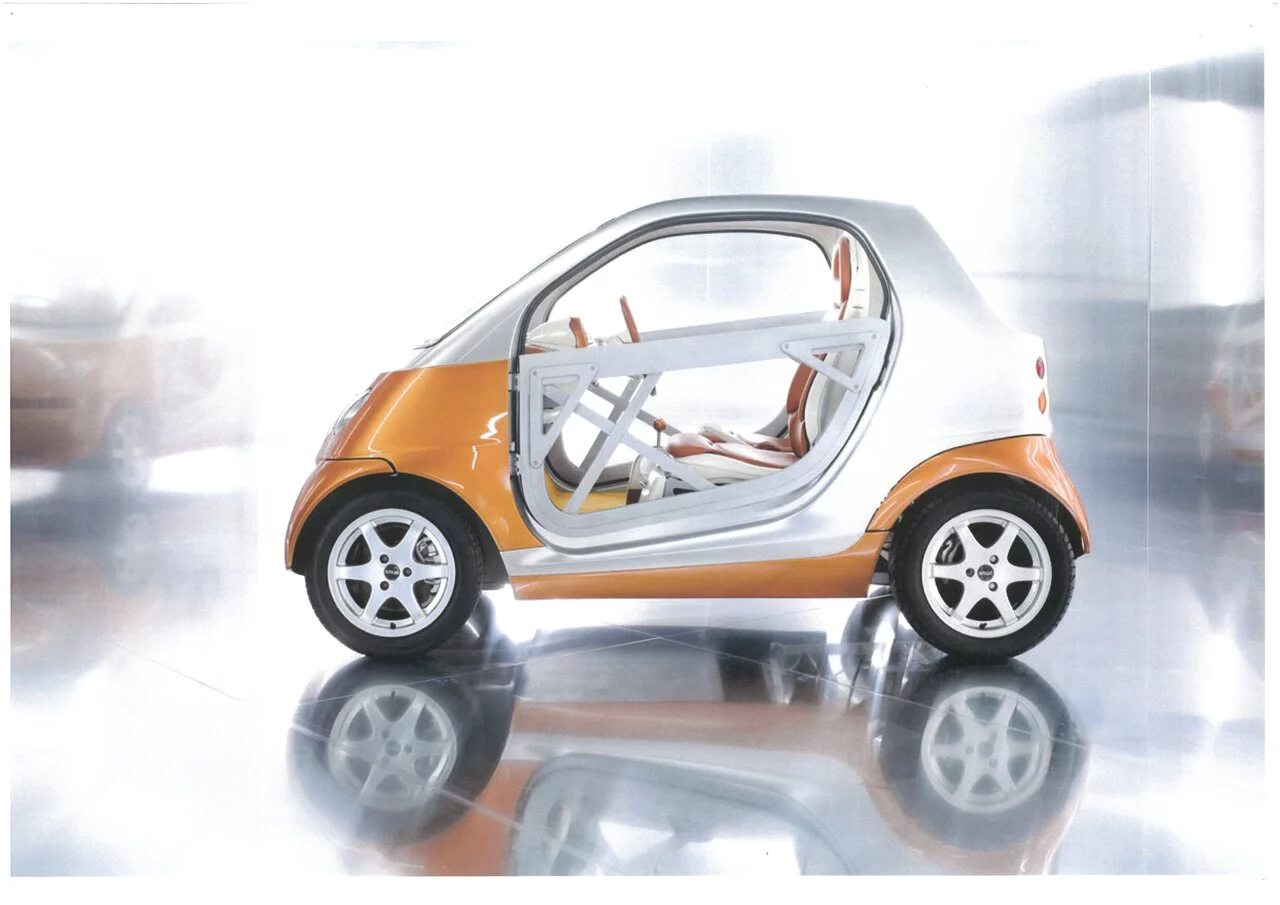

The concept car as presented in Paris in 1996, staged as a work of art in a silver, mirror-like setting. Alongside the visible Tridion safety cell, the doors already revealed their side-impact protection structures. Source: Mercedes-Benz Classic
A Big Idea in a Compact Format
Every strong brand starts with a single idea. Growing up in the city of Hamburg in the 1950s and 1960s, Johann Tomforde was struck early on by a simple observation: why move around so much metal just to carry, most of the time, a single person from A to B? He watched the everyday problems piling up on the streets around him – the endless search for parking spots, the noise, the traffic jams. From this question and the observation of problems occurring in traffic-heavy cities grew the vision of a vehicle for two: compact on the outside, generous on the inside.
Around the same time at Mercedes-Benz, engagement with a similar city-car concept stretches back to the early 1970s, running in parallel with Johann Tomforde's own thinking. One key milestone was the Mercedes-Benz NAFA concept study: a highly efficient short-distance vehicle with a minimal footprint – but apart from size, far from the smart two-seater concept.
Another defining moment followed in 1991 at the Mercedes-Benz Advanced Design Center in Irvine, California, where design-concept engineers from Johann Tomforde's own team in Sindelfingen helped create the first MCC concept cars: the "eco-sprinter" and the "eco-speedster," each just 2.50 metres long and powered by an electric drivetrain. Their platform-chassis concept, with high-voltage batteries mounted under the seats and the electric drivetrain placed beneath the rear floor, was new at the time and would go on to set the direction for whole generations of electric vehicles. These two concept cars were the definitive forerunners of the smart DNA that still holds true today.
But Johann Tomforde knew that bringing a completely new vehicle concept to the streets would take a lot more than just simple reasoning and the right technical features. It needed its own brand, its own attitude. The right moment to anchor that idea at the highest level arrived, almost by chance, in 1993 at Amsterdam airport. En route to the Detroit Motor Show, Johann Tomforde runs into Helmut Werner, then a Mercedes-Benz board member. The senior executive spontaneously invites him to sit next to him during the flight. According to Johann Tomforde, the entire flight – eight hours, no sleep – became the workshop where the smart concept truly took shape.
Sometimes, even the biggest visions and best ideas need nothing more than a lucky punch and the right person willing to listen.
Cult Status Isn't Won in a Comparison Test
In 1997, just one year after the initial presentation of the very first concept car of the newly founded brand, the first series-production model as smart fortwo celebrated its official world premiere at the IAA in Frankfurt in 1997. Its shape was impossible to overlook.
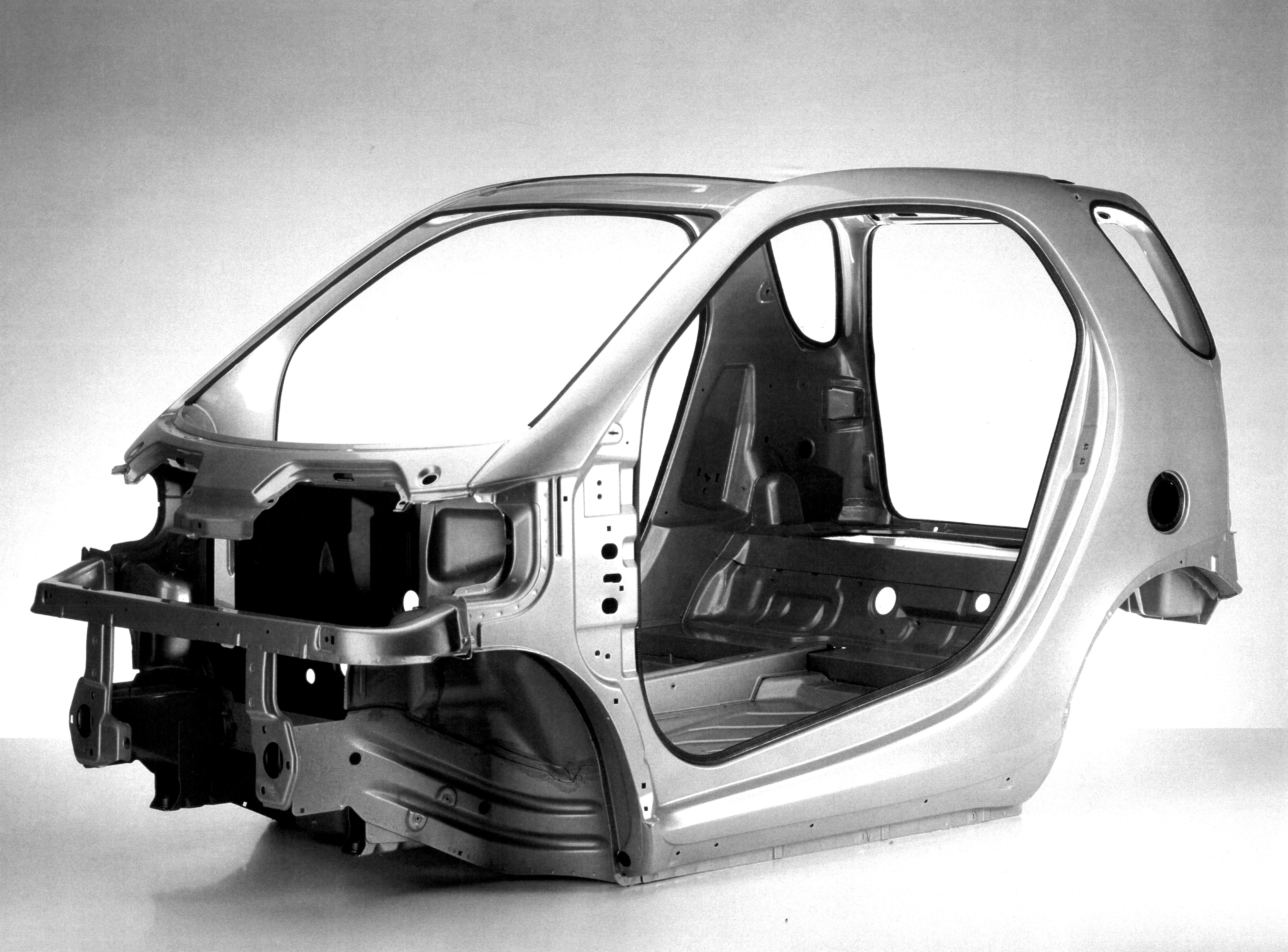
At the heart of its design was the Tridion safety cell, deliberately made visible rather than hidden beneath conventional bodywork. Its contrasting structure, ultra-compact proportions and unusual architecture made the engineering part of the car’s identity. Even its approach to crash protection followed a different logic: compact, modular crash boxes at the front and rear absorbed impacts while protecting the central safety cell, allowing the car to achieve a high level of occupant protection without the long crumple zones typical of larger cars.
Its engineering explained its appearance, and its appearance made its engineering visible. The result was a car whose unconventional character was immediately recognisable – and which turned a radically different approach to urban mobility into something people could see, understand and ultimately embrace.
jpg
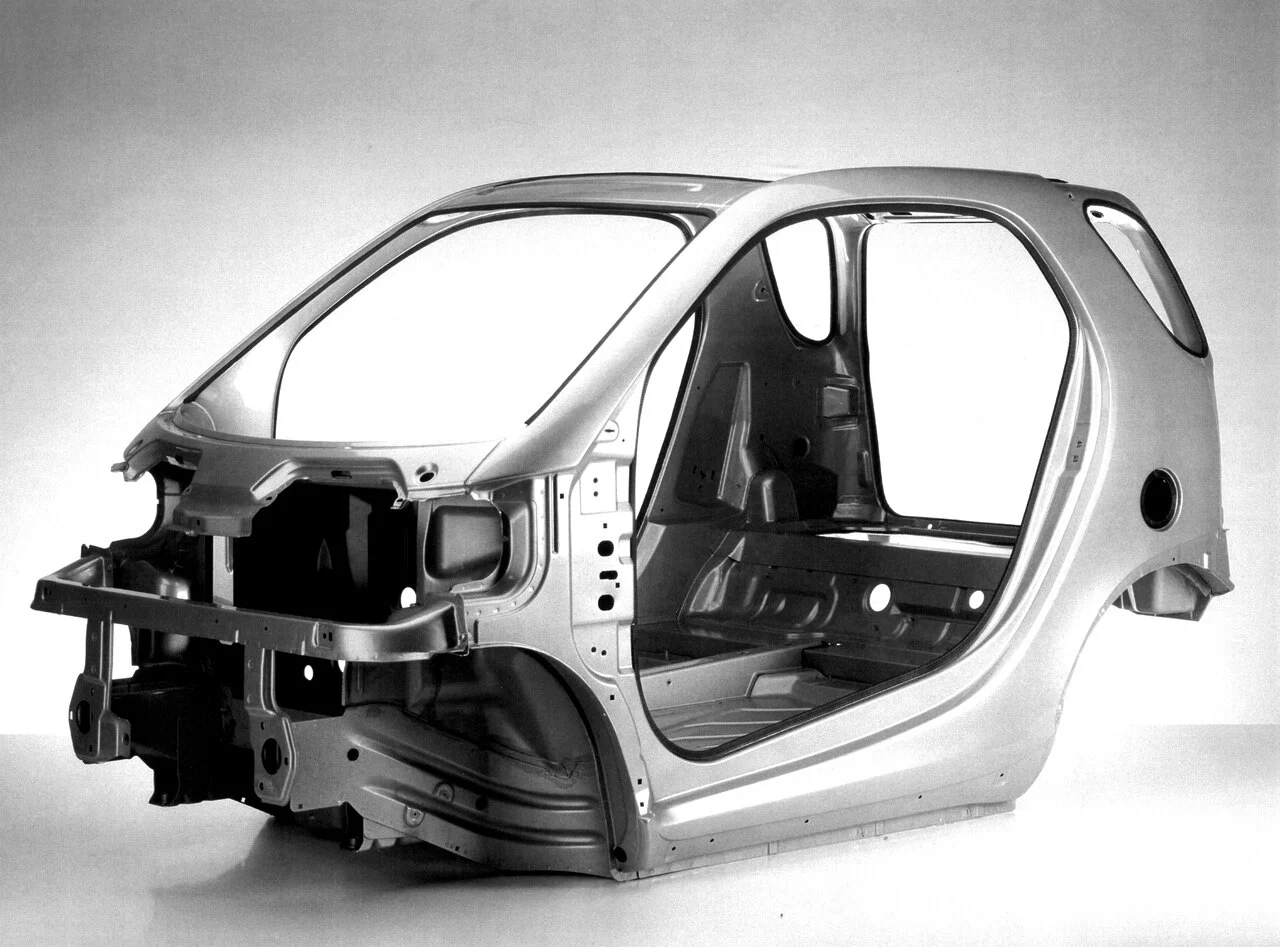
The original smart Tridion safety cell. Left deliberately visible, it turned the car's engineering into a design statement in its own right, wrapping a robust structure around the cabin without adding to the smart fortwo's compact dimensions. Source: Mercedes-Benz Classic
The visible Tridion safety cell gave the fortwo an unmistakable silhouette and transformed a functional safety concept into a confident design statement. Function became form, and form became identity. This recognizability helped the smart fortwo stand apart from every other car on the road and laid one of the foundations for its cult status.
jpg
jpg
Official press photos from the IAA 1997, showing front and rear views of the first smart fortwo. The coupé followed a new direction, breaking away from established small car concepts of its time. Its signature two-tone paintwork made the Tridion safety cell visible, giving the car a strong sense of recognition. Source: Official smart press footage from IAA 1997, Mercedes-Benz Classic
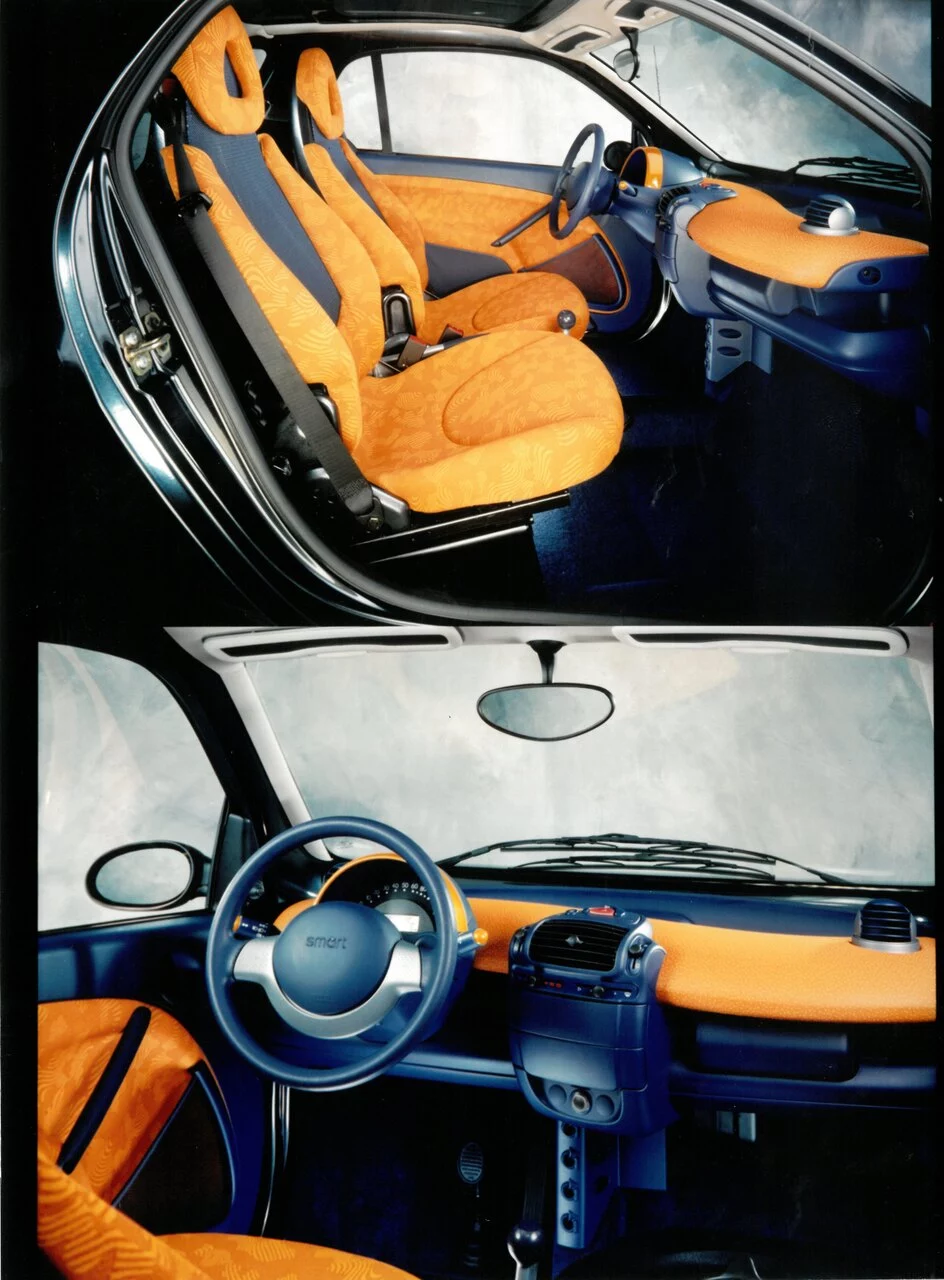
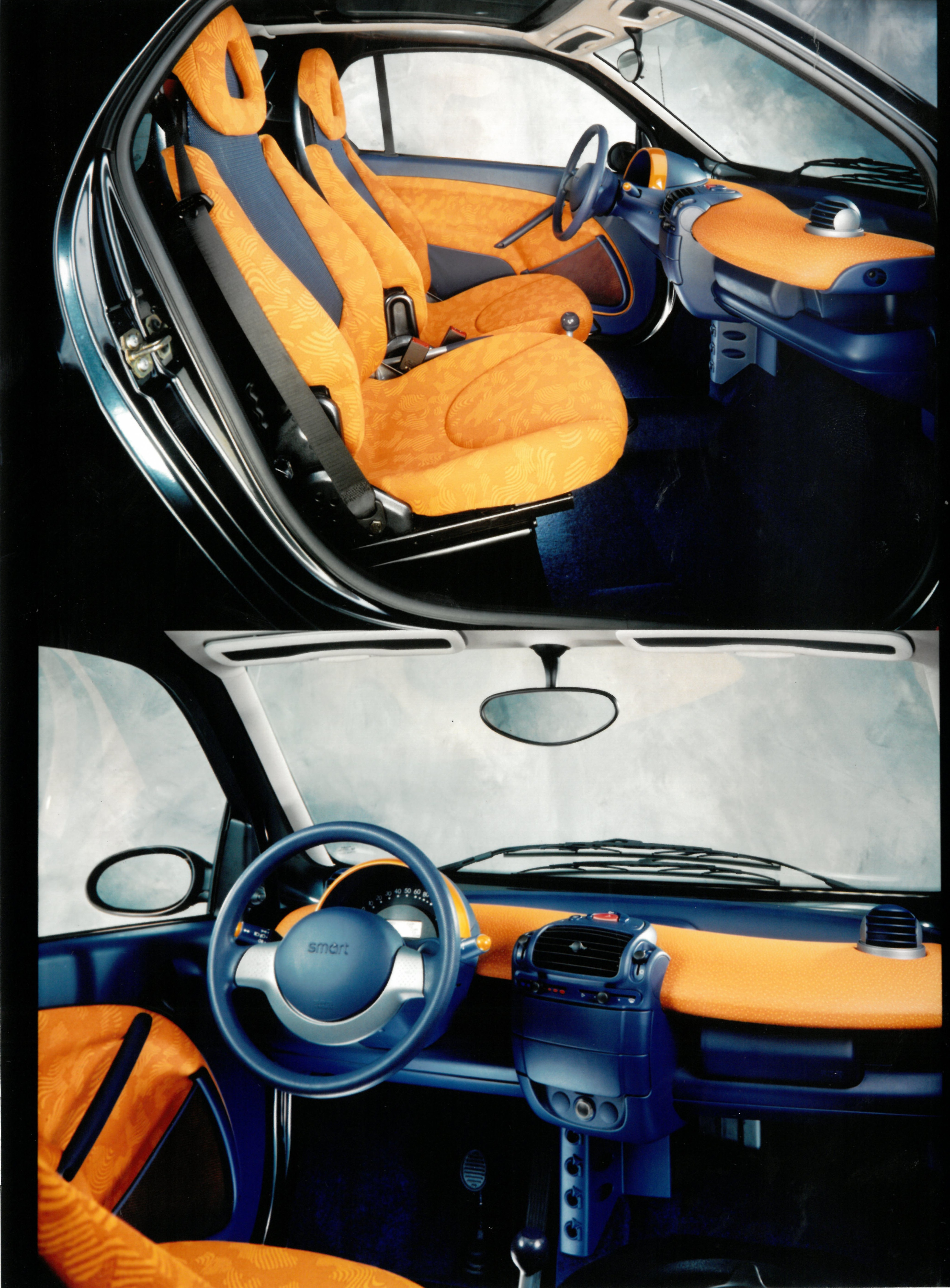
The offset seating was born from thinking about side-impact safety: with backrests of the seats designed to pass each other’s shoulders rather than collide. At the same time, it created a surprisingly open, spacious feel.
jpg
Interior photos from the smart fortwo's premiere at the IAA 1997, colourful and distinctly of its era. Even this first generation featured an S-shaped cockpit and unconventional interior design details, a principle the new smart #2 carries forward today. Source: Official smart press footage from IAA 1997, Mercedes-Benz Classic
This fusion of function and form defined smart from the very beginning. Johann Tomforde experienced the power of that effect as early as 1993, while working on the development of the two-seater concept. He recalls driving an early prototype down Sunset Boulevard in Hollywood, USA, and parking outside a trendy restaurant. The car carried no smart branding and gave little away about what it was.
Yet people stopped to look. They were curious, trying to figure out what they were seeing. Nobody knew its specifications or what was under the cover. They simply found the car intriguing. For Johann Tomforde, that moment offered an early glimpse of what would become an important part of smart’s appeal. A car does not always have to be understood before it becomes desirable. Sometimes curiosity and emotion come first, while the rational reasons for choosing it follow later.
What started as a reaction to an unbadged prototype on a Hollywood street would soon repeat itself, on a much larger scale, once the smart fortwo successfully made its debut in 1997 and reached actual driveways and city streets around the world in 1998. The smart fortwo went on to win over generation after generation. Whether eighteen or well into their eighties, one thing was clear to all: this was no ordinary compact car. For some, it was the comfortable measurements of the vehicle and the effortless parking. For others, individuality and features. Soon, more and more came probably to the same conclusion as Johann Tomforde: “Not that much metal is needed, to bring me from A to B. in a city.”
Passion Can't Be Automated
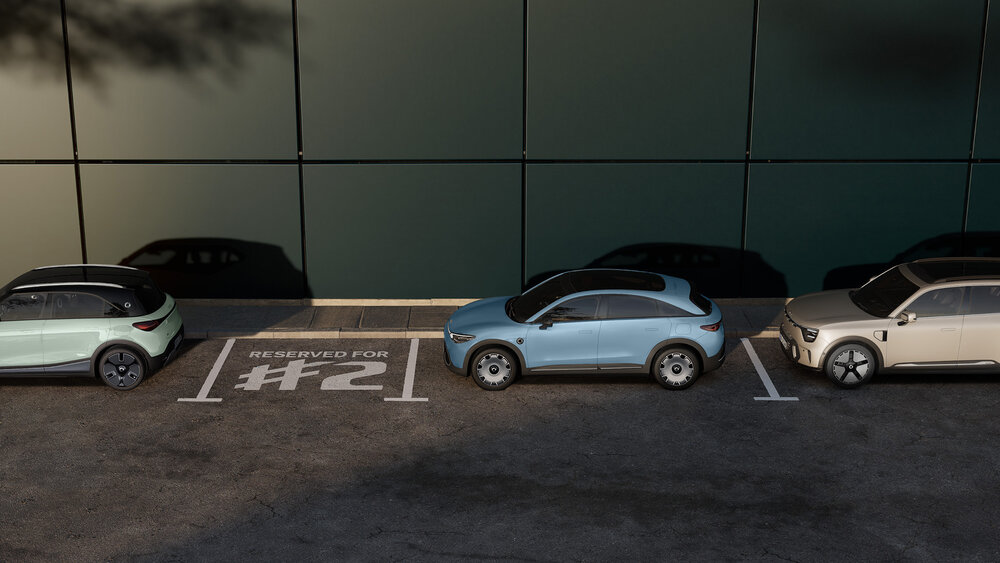
Today, the smart product portfolio in Europe is more diverse and fully electric. The smart #1, smart #3, and smart #5 each speak to different customer lifestyles and needs – that's what the smart claim “Open Your Mind” stands for: the right car, for the right person, every time. The new smart #2 is the most fundamental expression of that idea within the product family. It carries the original idea of urban mobility into the present: ultra-compact dimensions, effortless parking, urban agility, a turning circle of 6.95 metres curb-to-curb, the next generation of the signature safety cell, the Tridion Cell Evo, and the signature wheels-at-the-corners stance that creates space inside without adding to the vehicle’s size.
jpg
The all-new smart #2, celebrating its world premiere at the Paris Motor Show in October 2026. Thirty years after the original two-seater's debut at the Louvre, it carries that same spirit into a new, fully electric era. Source: smart
For Johann Tomforde, the true foundation of lasting brand quality isn't great technology alone, it's continuity and genuine conviction. That's why he's especially glad that the head of Design smart at Mercedes-Benz, Kai Sieber, once one of his students, is today one of the leading minds on the international team behind the smart #2. The two are still in close contact and have had in-depth discussions about the new #2.
For the smart #2, so many smart fans from around the world are coming together once more – people who have followed this brand for years and who are writing its next chapter with real dedication. Being a part of the design team already for more than a decade, I can say with confidence: the smart #2 carries that same design DNA forward, unmistakably smart. And that's exactly how it should be. Because great products are never just about plain technical specifications. They're born when a design keeps evolving without losing its identity, combining lasting appeal with real innovation, so people recognize it instantly, wherever they see it.
Kai Sieber, Head of smart Design at Mercedes-Benz Design
Paris Is Not a Full Stop
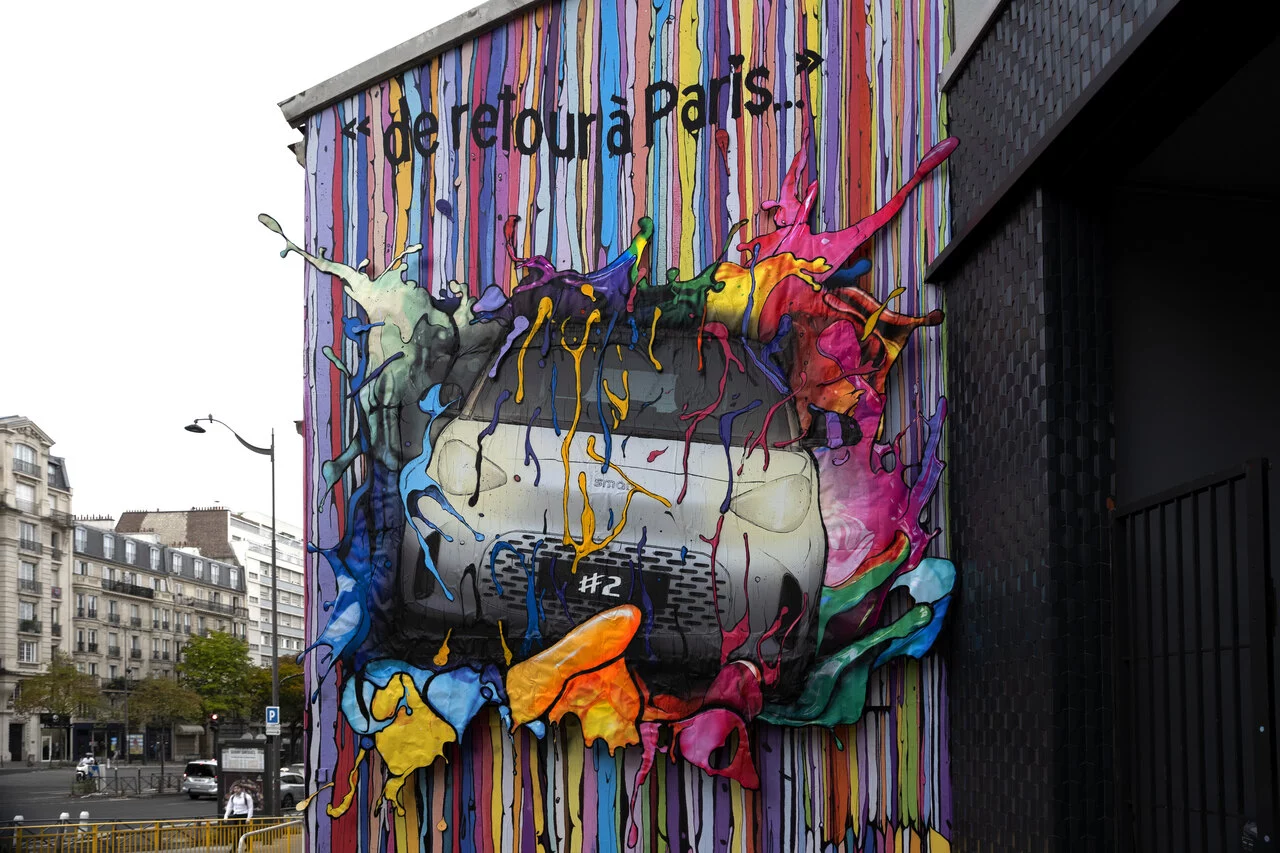
On October 12, 2026, the all-new smart #2 celebrates its world premiere at the Paris Motor Show. Thirty years after that defining evening at the Louvre, it however doesn't close a circle. It is the beginning of a new smart era, always remembering where it came from.
jpg
smart #2 Mural in Paris. Source: smart
Asked what he imagines smart might look like in another 30 years, Tomforde shares two hopes. First, he hopes the brand keeps evolving with every new generation, instead of standing still, remaining the benchmark of its segment, desirable enough that people say, "That's what I want." Second, he wishes there will be always people who have internalised the brand’s heritage and truly understand it. People who want to keep building on it with real passion. That, he says, is the point that truly matters.
Since I left smart, I've never stopped thinking about it. It's still my favourite project, going all the way back to my early years
Johann Tomforde
About Johann Tomforde
Johann Tomforde is regarded as one of the founding minds behind smart. In the early 1970s, he developed the idea for a compact, safe electric city car at Mercedes-Benz – an idea that became central to the creation of the smart brand. As a designer and engineer, he guided its development for years, from the earliest concept studies through to the market launch of the smart fortwo. Alongside his work at Mercedes-Benz and smart, he also served as a professor of Transportation Design and Industrial Design in Pforzheim, fostering a steady exchange of ideas between academia and industry. To this day, he follows the brand's evolution with genuine personal enthusiasm.
jpg
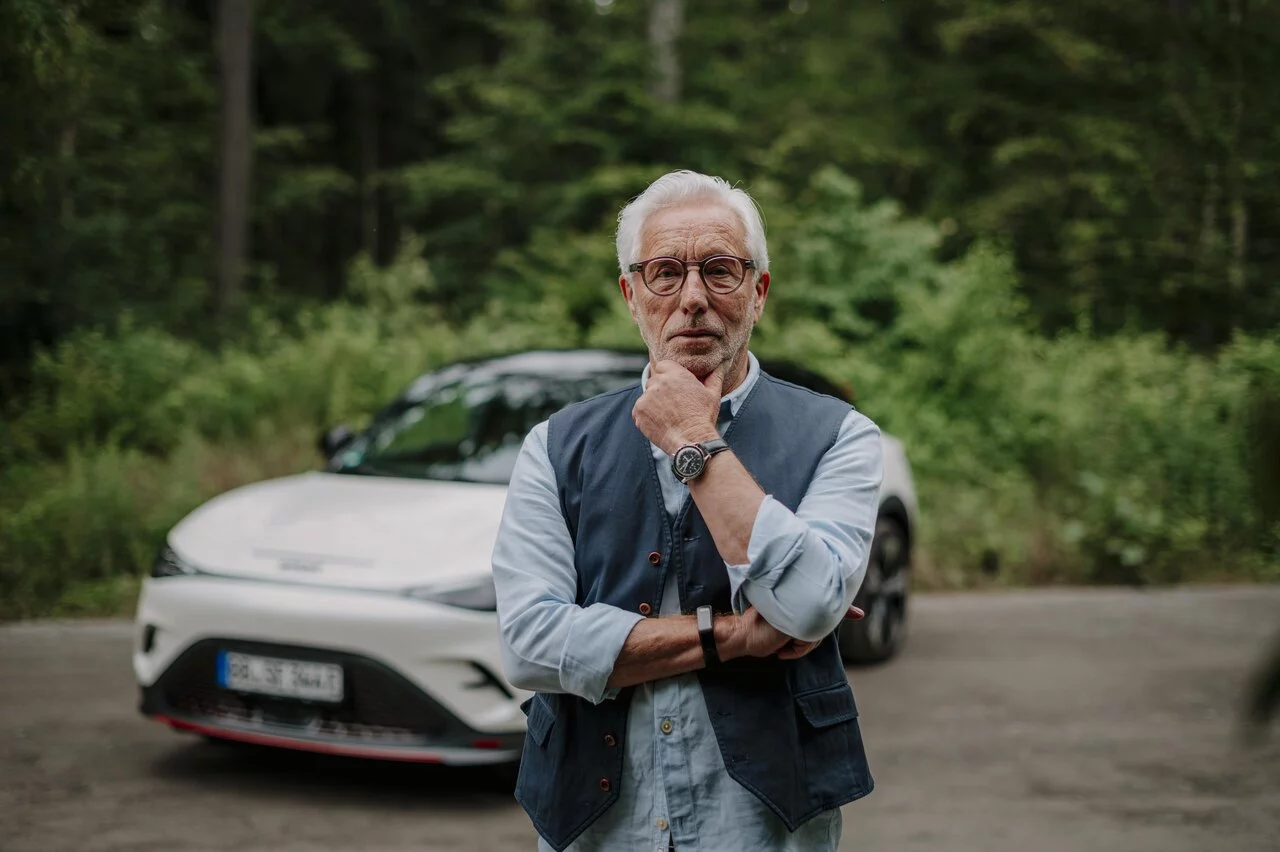
Johann Tomforde in front of a smart #3 during a test drive in 2024. Decades after helping create the brand, he still keeps a close, personal connection to the evolution of smart. Source: smart