On the Road to Paris: smart #2 Undergoes Global Testing Ahead of World Premiere
The all-electric smart #2 is currently undergoing an extensive global testing programme ahead of its highly anticipated world premiere at the Paris Motor Show this October.
Rigorous pre-production testing and validation ensure the reinvented two-seater city car delivers unmatched urban agility, driving stability, elevated NVH refinement, and uncompromising safety.
The seamless collaboration between the Mercedes-Benz Global Design Team and the smart Global R&D Team upholds global high standards, transforming a bold concept into a fully realised production model.
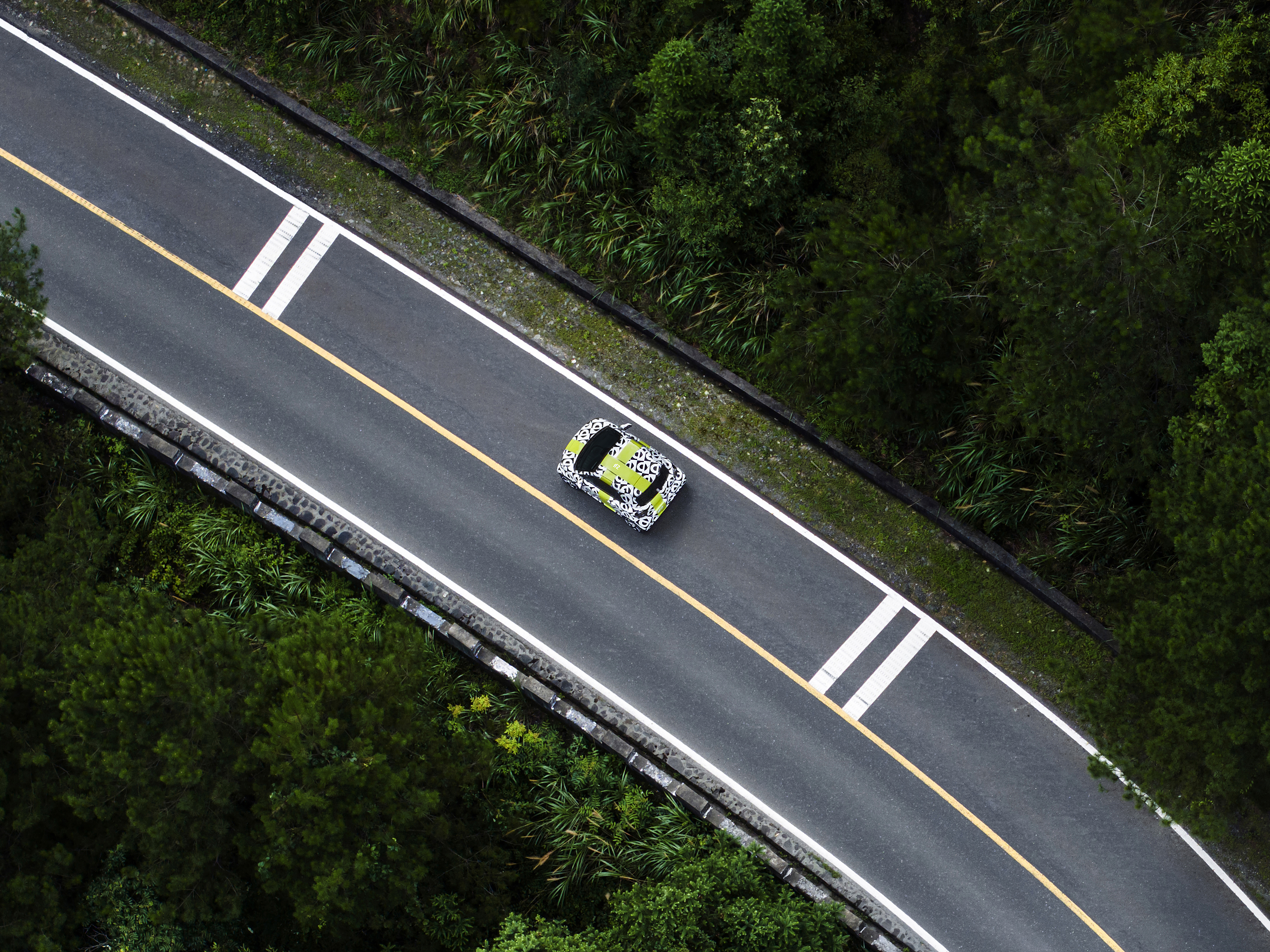
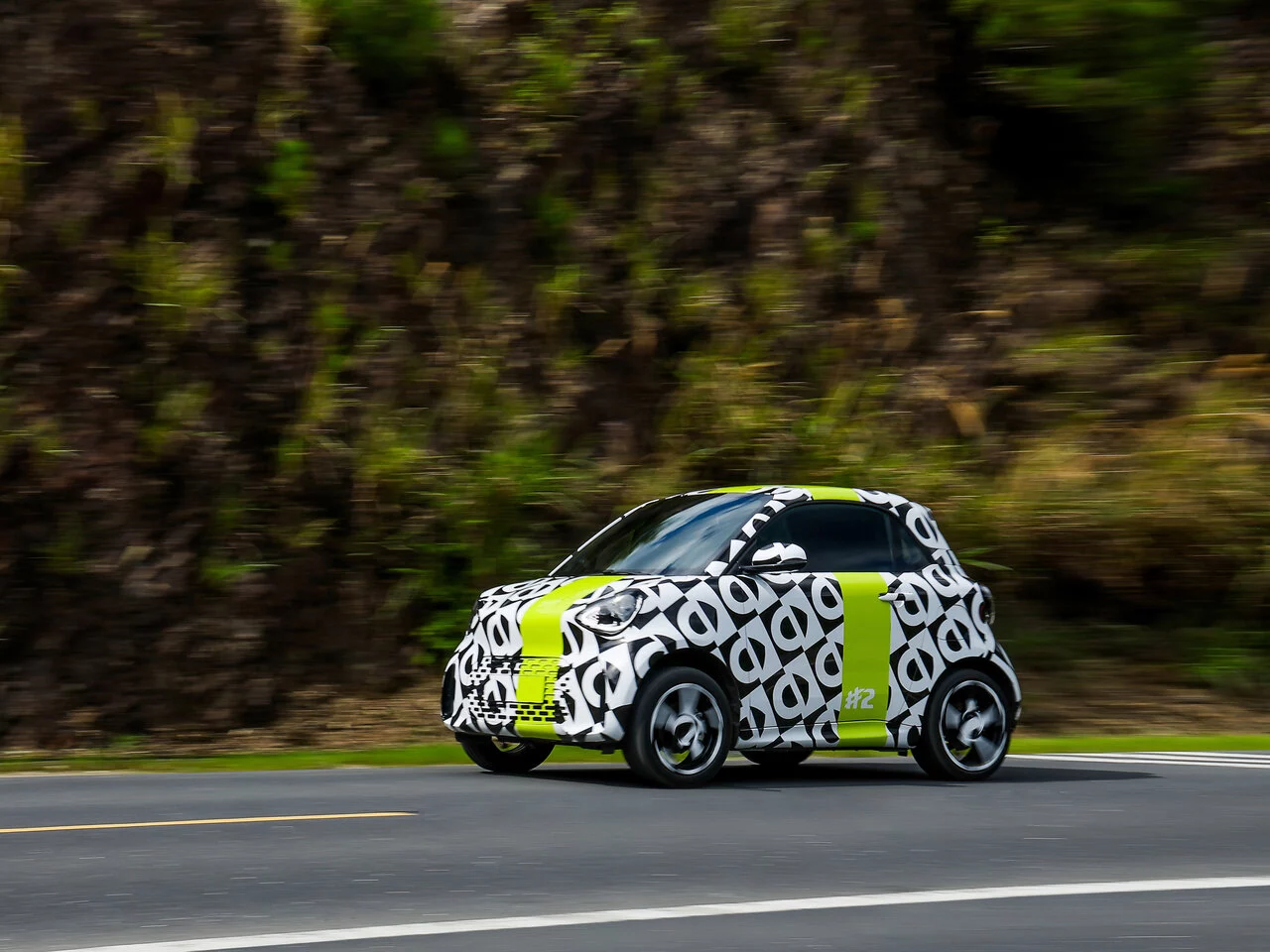
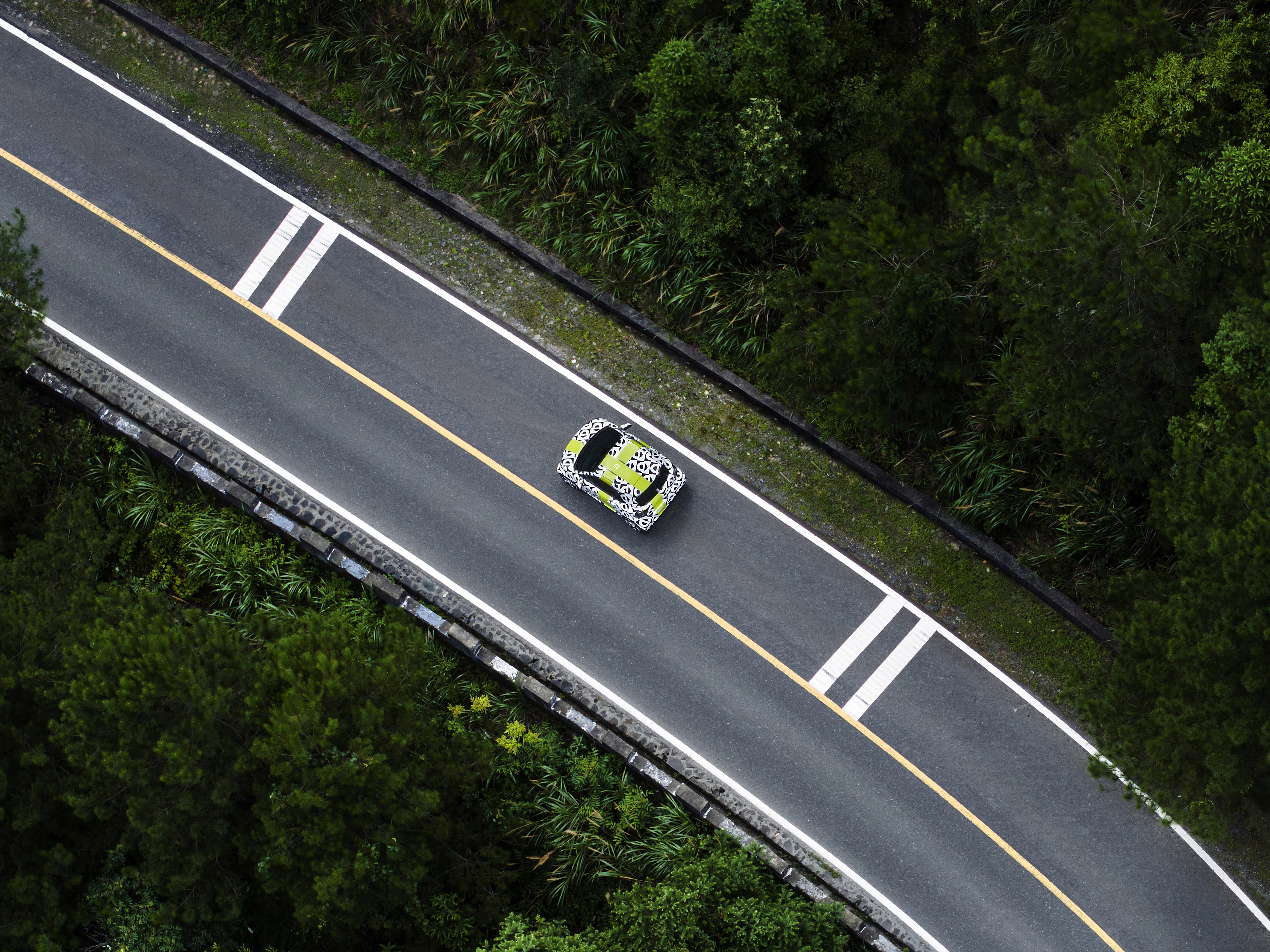
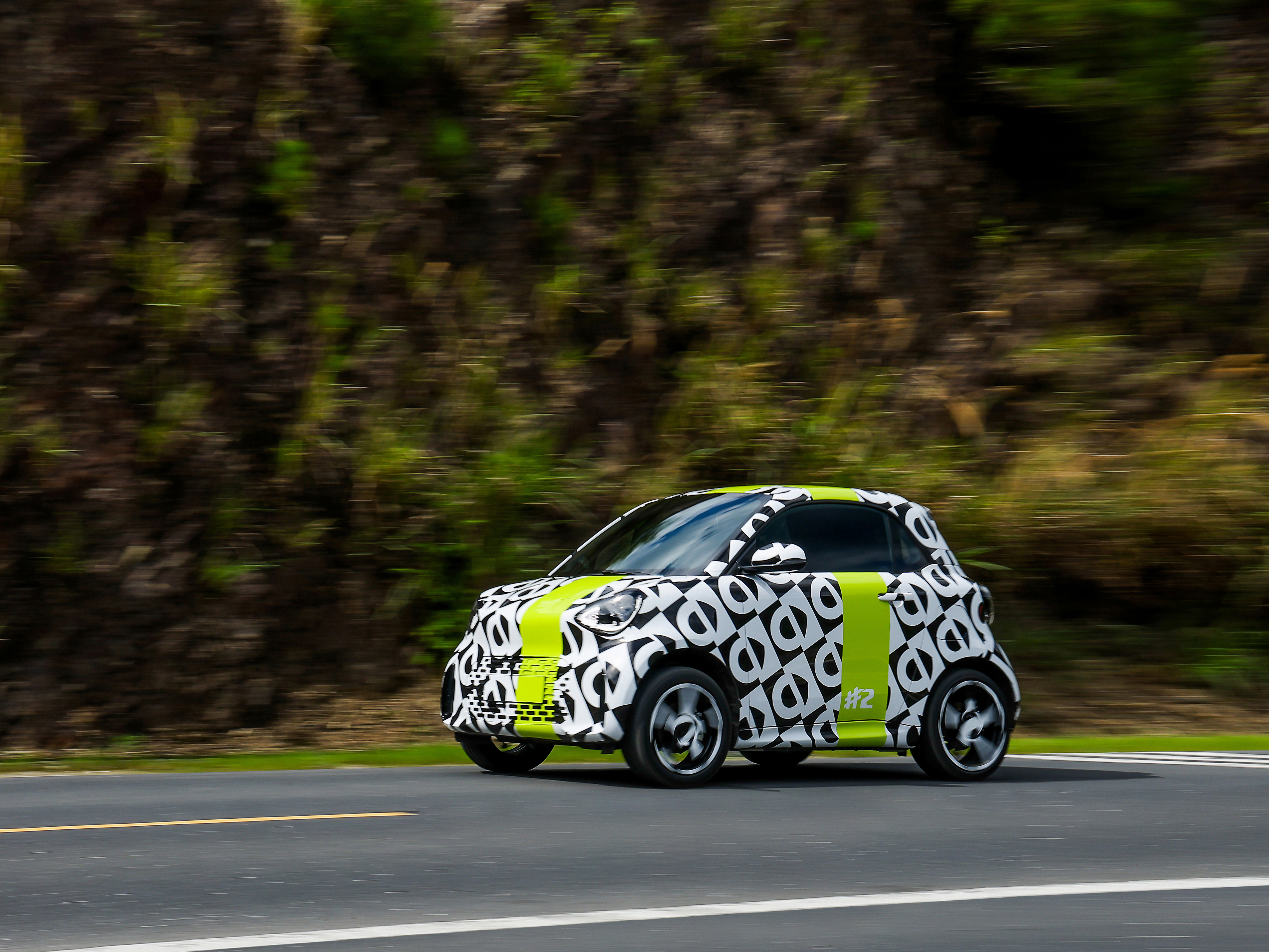
(July 20, 2026, Hangzhou, China) – With the reinvention of its iconic two-seater gathering global momentum, the smart #2 has taken to the roads in a bespoke black-and-white camouflage livery, styled by the Mercedes-Benz Global Design Team. The smart #2 is currently undergoing a rigorous global testing programme ahead of its world premiere at the Paris Motor Show this October, ensuring the vehicle fully embodies the brand’s core D.N.A.: Designed with Love, No Compromise on Safety, and Amazing Drives.
jpg
The smart #2 in bespoke camouflage livery designed by the Mercedes-Benz Global Design Team
The smart #2 is born from the seamless, high-level collaboration between the Mercedes-Benz Global Design Team and the smart Global R&D Team. Through the relentless global physical testing programme, we are confident to offer global consumers class-leading safety, driving stability, whisper-quiet refinement, and the unmatched urban agility that defines our legacy.
Mr. Yang Jun, Global CTO of smart
jpg
Mr. Yang Jun, Global CTO of smart
As an all-electric two-seater city car, the smart #2 is designed to navigate the challenges of modern urban environments with ease. Featuring the signature “wheels-at-the-corners” stance — a hallmark of smart fortwo’s space-maximising design since its first generation — it builds a solid geometric foundation for exceptional urban manoeuvrability even in the tightest city spaces.
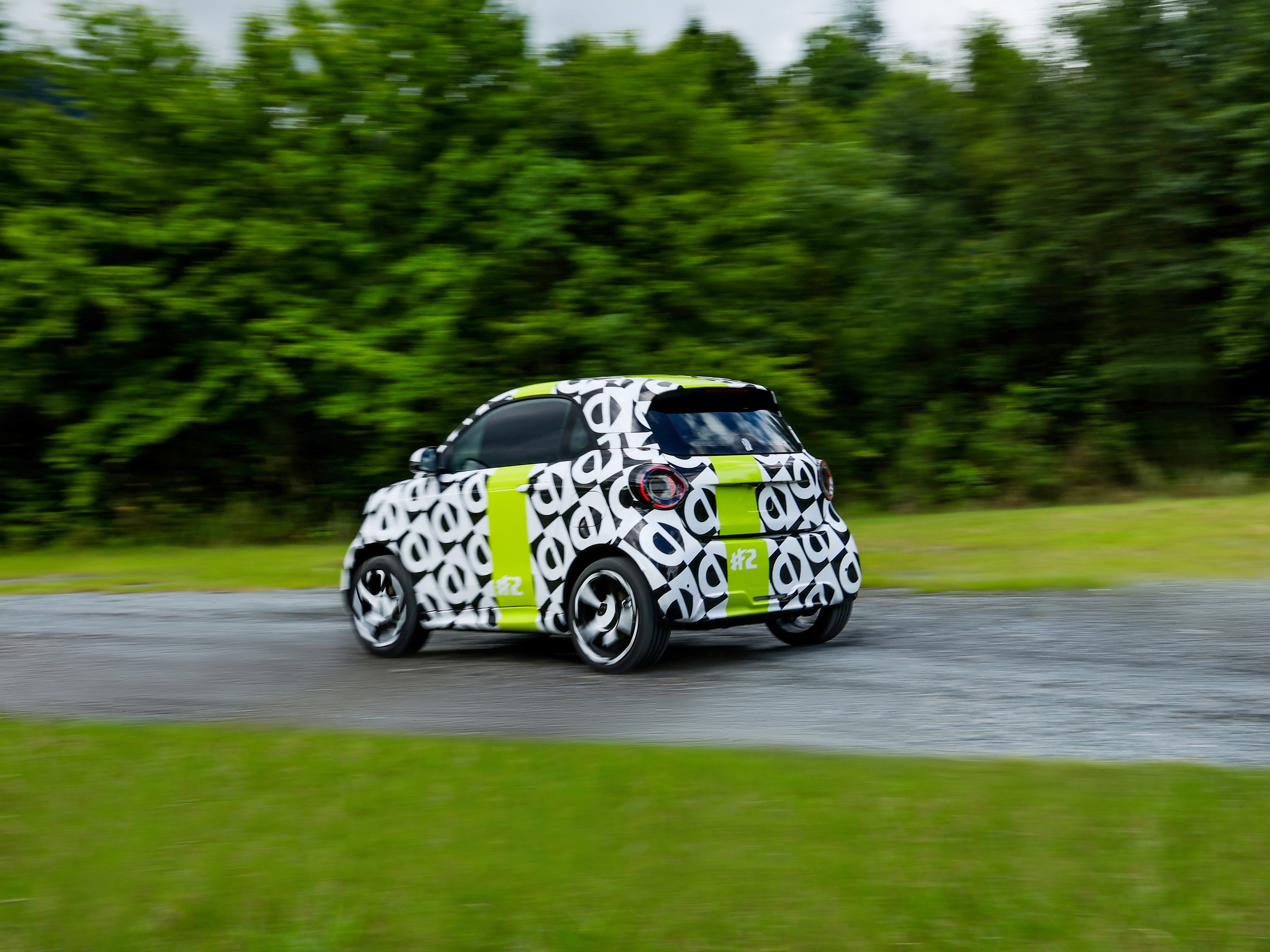
At dedicated proving grounds, the vehicle’s agility was tested against a wide range of real-world urban challenges, including unexpected obstacles, emergency lane changes, and low-grip wet road conditions. Continuous refinement of the chassis hard points, steering ratio and rack travel as well as suspension movement control ensures the vehicle remains stable, responsive and agile in everyday city driving.
jpg
The smart #2 undergoing rigorous testing to refine stability, responsiveness and agility
Beyond agility, the rigorous physical testing programme aims to ensure this very compact vehicle can deliver an elevated, serene cabin experience.
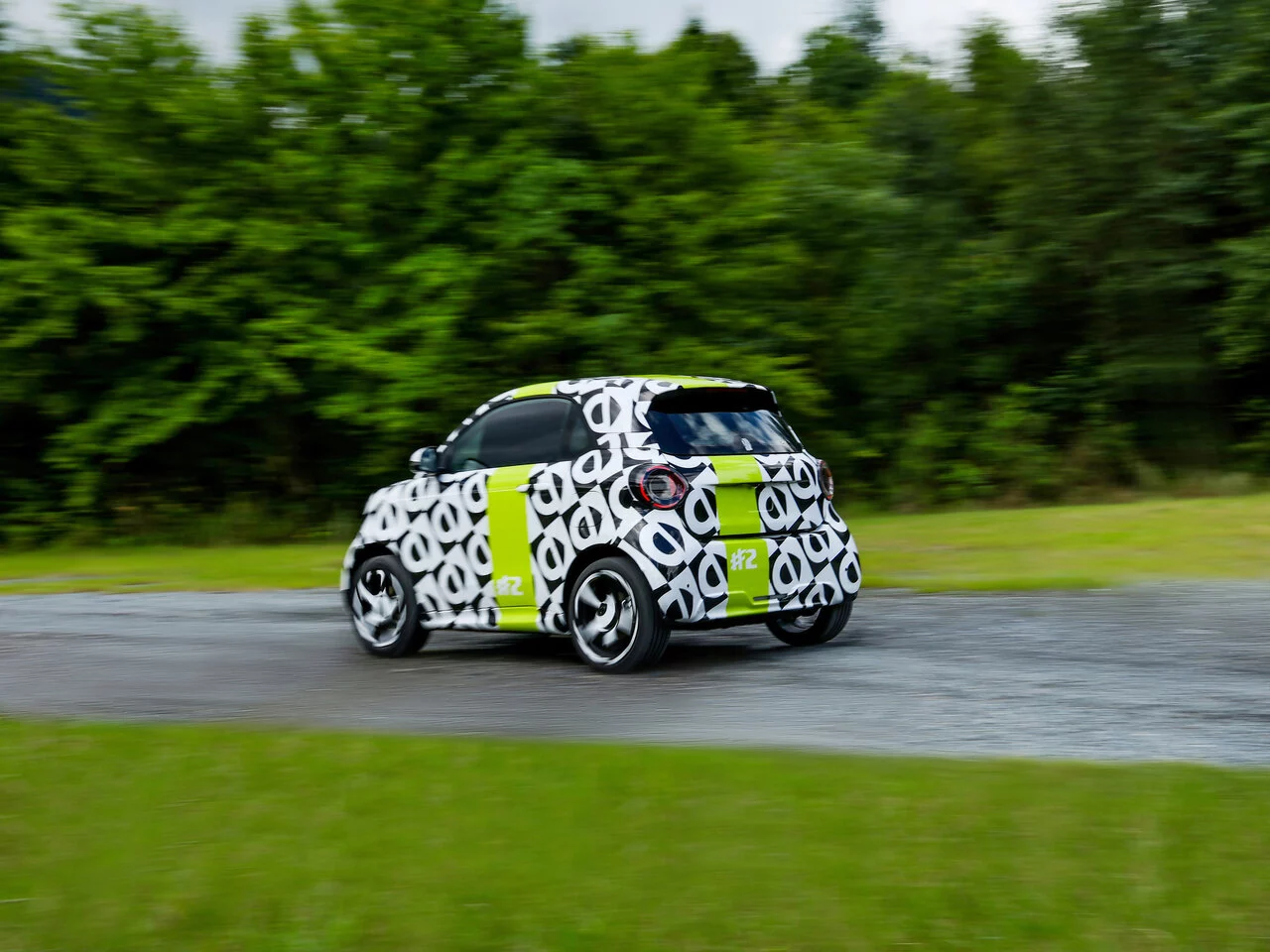
To ensure that cabin comfort aligns with the vehicle's refined aesthetic, extensive NVH (Noise, Vibration, Harshness) validation across multiple demanding environments was conducted – including wind tunnel, acoustic chamber, temperature-controlled four-post rig, proving grounds and public roads. The testing activities encompassed wind noise, road noise, powertrain NVH, thermal NVH, squeak and rattle, as well as sound quality optimisation.
By testing various tyre compounds on rough asphalt, grooved concrete, and high-speed straights, engineers sought an optimal balance between low rolling resistance for maximum range and exceptional noise reduction. To achieve long-term reliability, the vehicle has been subjected to demanding durability testing over bumpy roads, continuous undulations, and potholed urban streets. Targeted impact tests simulated common city-driving scenarios, such as mounting kerbs or striking deep potholes.
jpg
A focus on refinement and comfort helps shape the smart #2 cabin experience
Refining chassis rigidity and structural stress points ensure the smart #2 will serve as a highly reliable companion in the city. Complementing this structural resilience, the next generation of the renowned tridion safety cell combines compact exterior dimensions with a robust structure that meets modern safety requirements, providing high protection, stability, and driver confidence.
Highly anticipated by urban drivers around the globe, the production model of the smart #2 is preparing for its official world premiere at the Paris Motor Show in October 2026. Stay tuned as the legendary urban icon makes its electrifying comeback.
It’s Back. smart hosted an exclusive Tech Workshop within an immersive “smart City” in Beijing, offering a deep dive into the advanced engineering and technologies behind the all-electric smart #2....
Building on their successful global collaboration, smart and Sennheiser are extending the premium audio experience to the brand's newest model smart #2.
Selected lines of the city two-seater will b...
Bringing its “Change of Perspectives” philosophy to the streets, smart surprises the public with an unexpected first glimpse of the all-electric smart #2 through an expansive contemporary mural art...
Following its highly acclaimed global debut at the Global Brand Event in Beijing, the smart Concept #2 arrives in Rome to showcase the design and technical direction of a purpose-built two-seater. ...
Receive exclusive news
Are you a journalist or do you work for a publication? Sign up and request access to exclusive news.