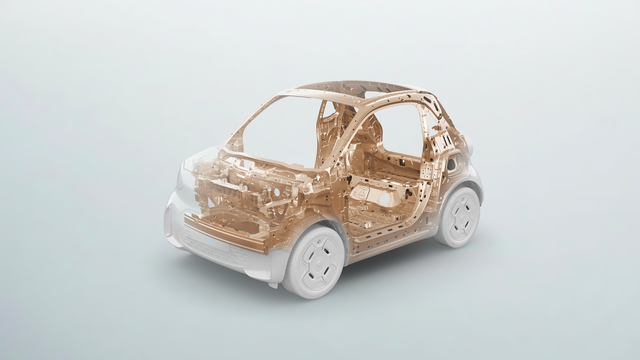
smart #2 Will Feature Tridion Cell Evo for New Level of Safety in the City-car Segment
jpeg
The next generation of the renowned Tridion safety cell in the new smart #2 will ensure a body structure built to meet high safety standards.
The Electric Compact Architecture (ECA) combines agile handling and space efficiency in an ultra-compact format.
Styled by the Mercedes-Benz Global Design Team, the all-electric smart #2 represents the evolution of smart’s iconic two-seater city car for a new era of electric mobility.
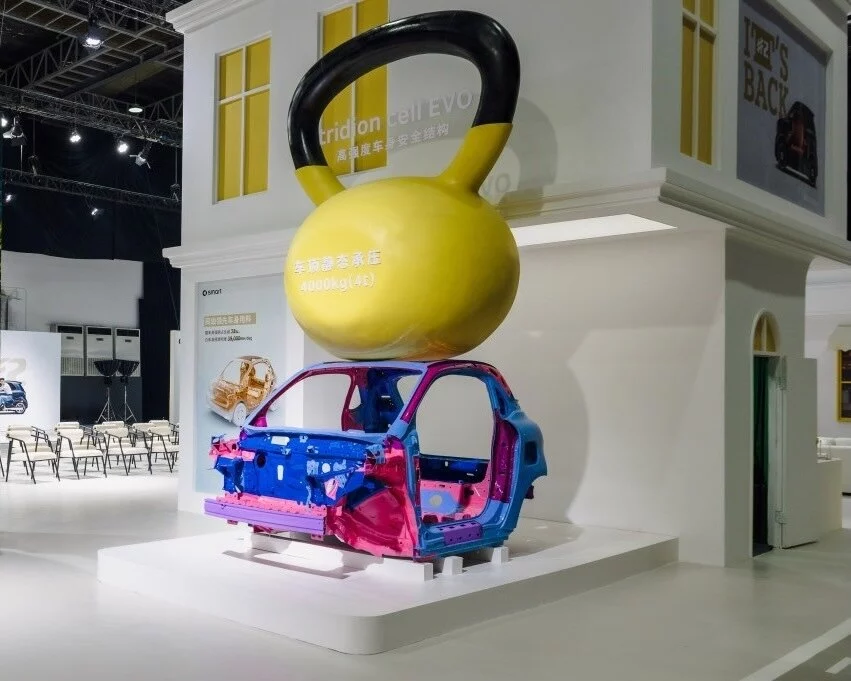
September, 28, 2026, Leinfelden-Echterdingen, Germany. The upcoming smart #2 will provide a new level of city-car safety with its Tridion Cell Evo body structure. Safety is a core attribute of the smart #2, irrespective of its compact dimensions1. Refinements to chassis rigidity and structural stress points ensure driver safety and confidence in the city and on the highway. The next generation of the renowned Tridion safety cell complements this structural resilience, combining compact exterior dimensions with a robust structure that meets modern safety requirements.
png
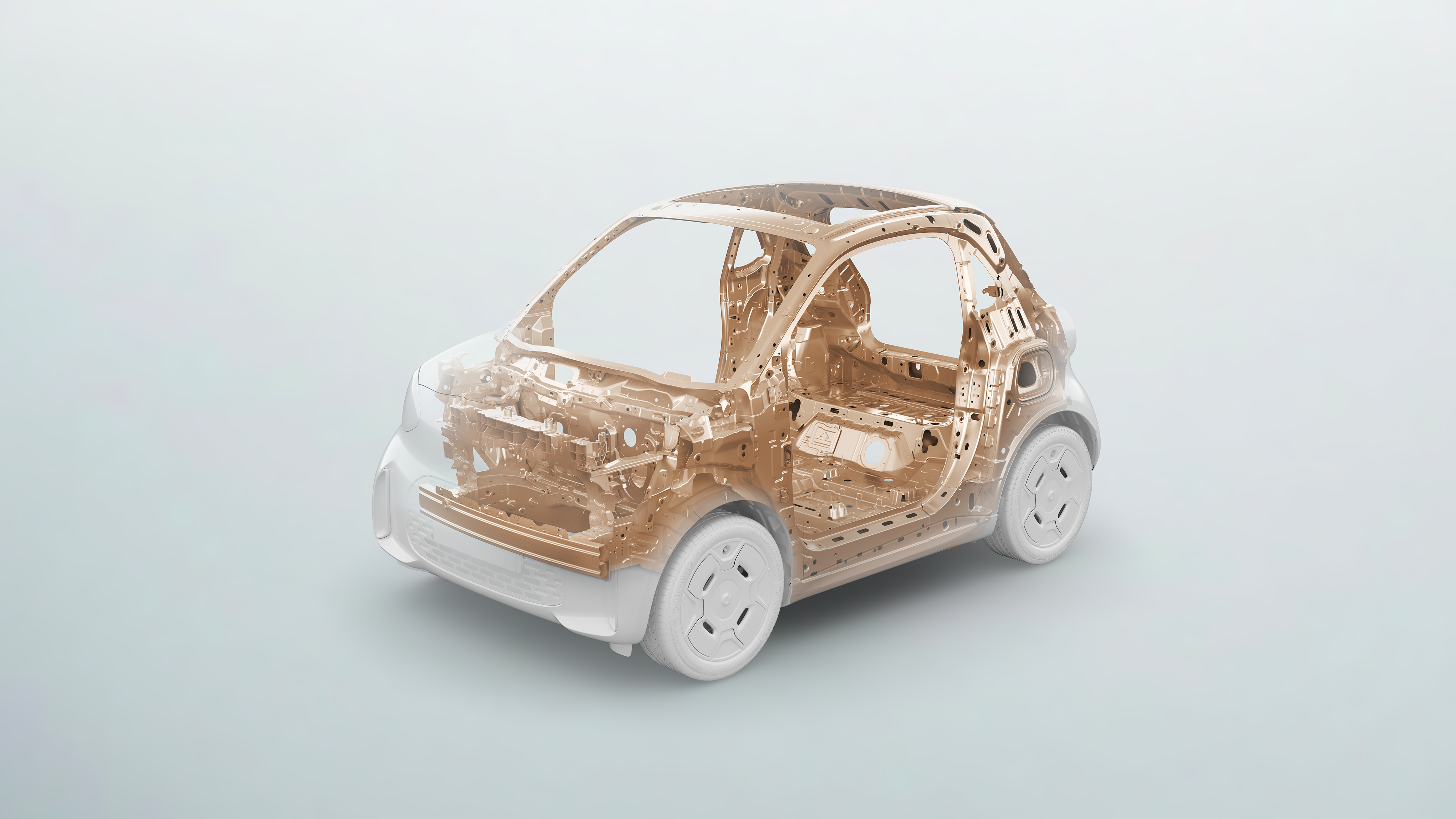
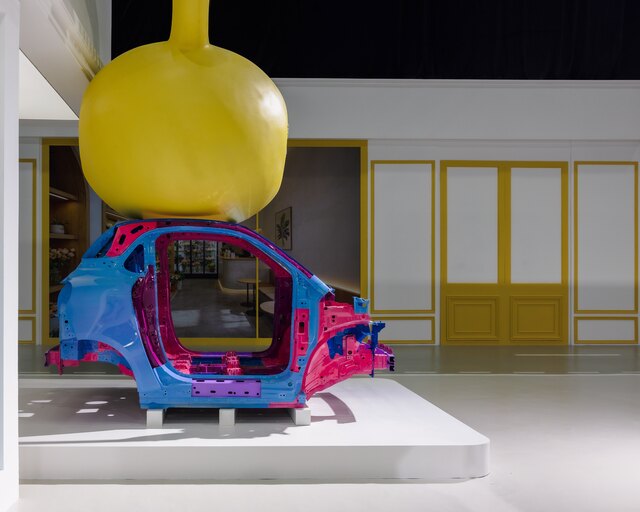
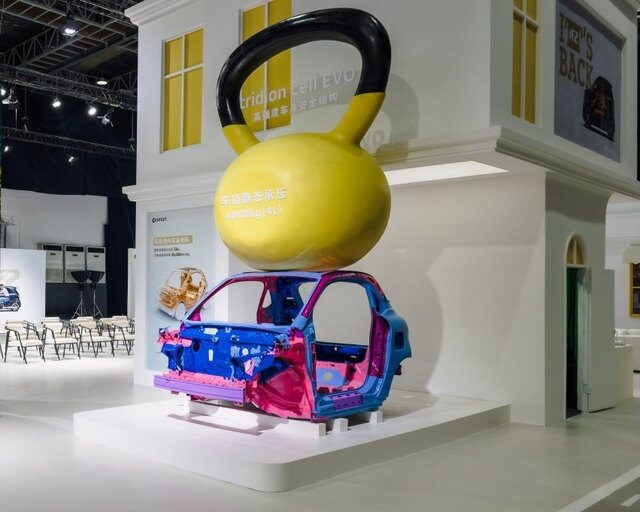
The new Tridion Cell Evo
Tridion Cell Evo: No Compromise on Safety
With the Tridion Cell Evo, the smart R&D and engineering team further developed one of the most recognisable elements of smart’s safety philosophy for a new electric era. More than 78% of the body structure is constructed from high-strength steel, complemented by a three-layer steel configuration and materials with tensile strength of up to 1,800 MPa (Megapascal). With torsional stiffness of 39,000 Nm/deg (Newton Meter per degree), the structure has been engineered for exceptional rigidity and can withstand a roof load of more than four tonnes.
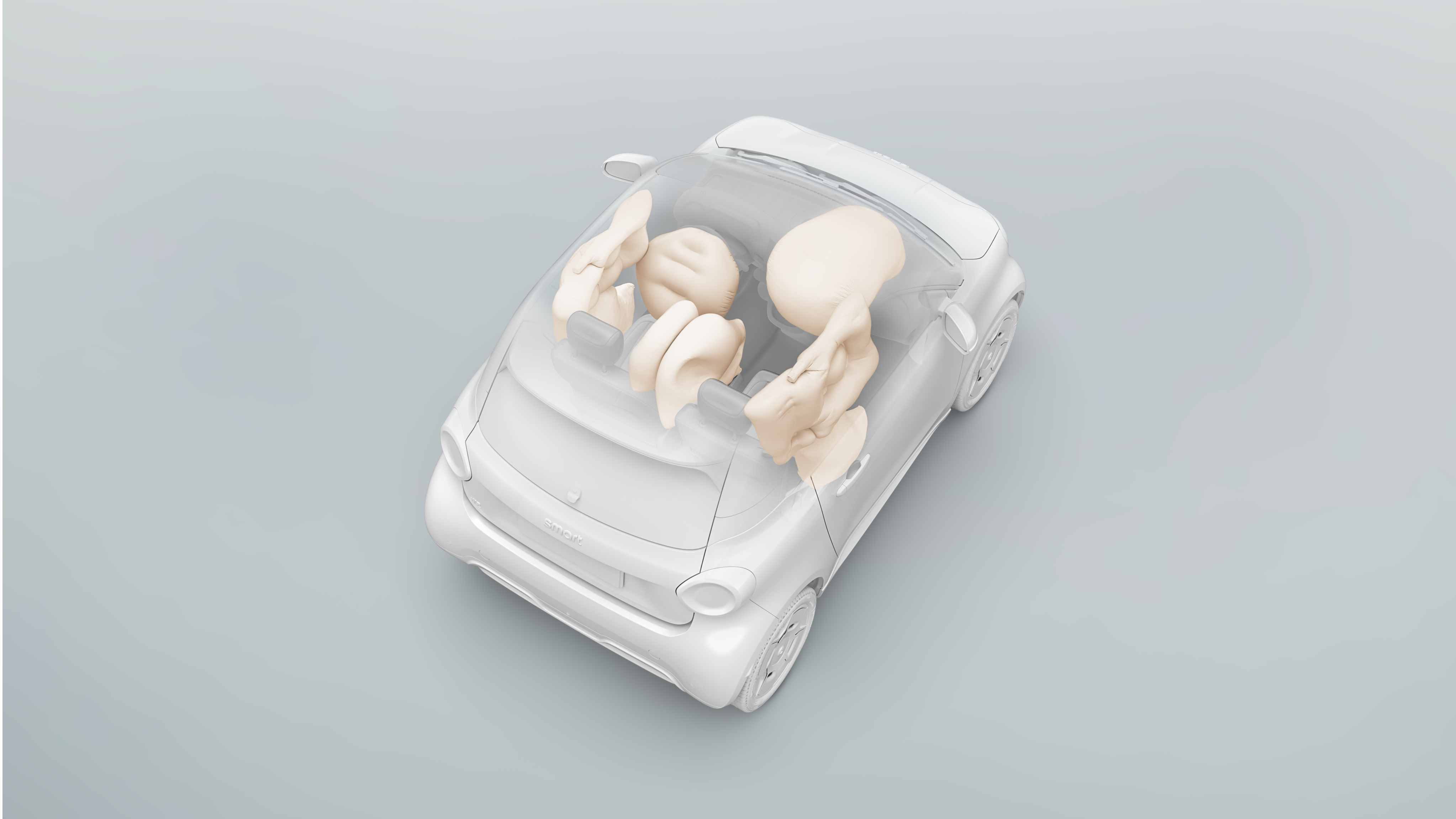
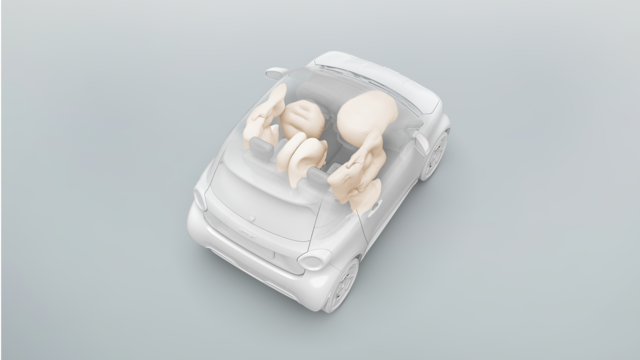
Occupant protection is further supported by seven airbags and an advanced seatbelt system combining Pyrotechnic Lap Pretension (PLP) and Crash Locking Tongue (CLT) technology. These systems help to enhance restraint of the pelvis and lower limbs and reduce forward occupant movement in the event of a collision. The battery system is protected by a layered structural design, further supporting the smart #2’s safety concept. Additionally, the smart #2 has also undergone extensive vehicle-dynamics and stability validation.
png
Seven airbags for maximum occupant protection
With the smart #2, our R&D team has focused on validating the Tridion Cell Evo and the ECA platform under real-world conditions, from city driving to extended testing on European roads and highways. This work ensures the vehicle's structure and setup for safety and agility are tuned specifically to European standards and driving conditions ahead of its market launch.
Dr. Tilo Schweers, Vice President R&D at smart Europe
The Electric Compact Architecture (ECA) as The Technical Foundation of the smart #2
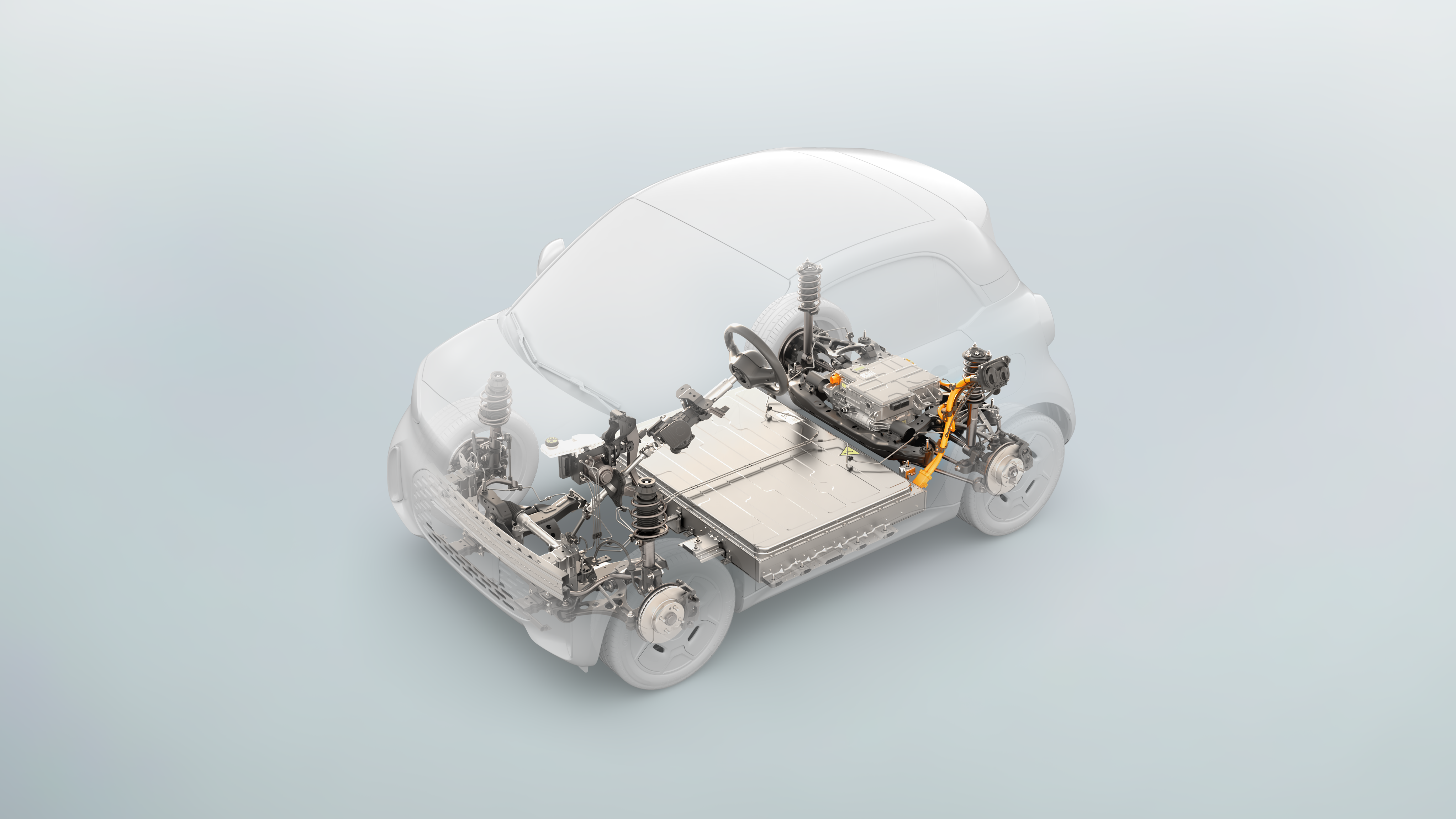
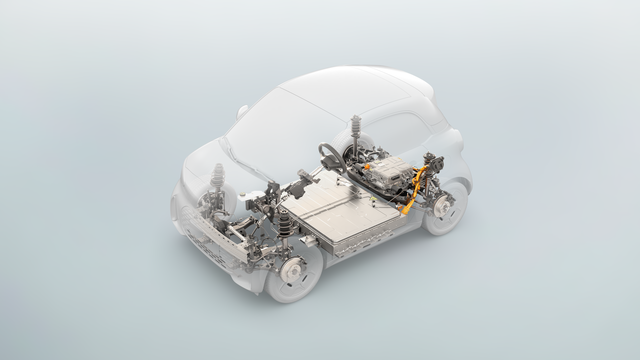
At the heart of the smart #2 is the Electric Compact Architecture (ECA), developed by the international smart engineering team. It is a purpose-built all-electric vehicle architecture made specifically for smart’s ultra-compact two-seater. The ECA platform brings generous cabin space, an advanced electric powertrain, robust safety structures and agile driving dynamics together. All within exceptionally compact exterior dimension within a vehicle body measuring less than three metres.
png
Electric Compact Architecture (ECA)
Despite its ultra-compact footprint, the proprietary ECA platform accommodates a 35.8 kWh battery using CATL cells, targeting 290 km of combined range (WLTP) and supporting DC fast charging from 10% to 80% in 20 minutes2. The ECA also incorporates a highly integrated 11-in-1 electric drive. The compact unit combines multiple functions like electric-drive, power-electronics and controls. This approach reduces packaging complexity and supports the efficient use of space resulting in the smart #2’s ultra-compact footprint.
Effortless Urban Dynamics and Agility
With a curb-to-curb turning circle of just 6.95 metres, the smart #2 is engineered for effortless navigation through narrow streets, confined parking spaces and tight urban environments. The smart #2 is the only vehicle in the segment to feature a five-link independent rear suspension. Together with its rear-wheel-drive layout and 50:50 front-to-rear weight distribution, the suspension contributes to a responsive, stable and agile handling. Across the full line-up, the smart #2 will be equipped as standard with tyres in a staggered-width configuration, with narrower front tyres and wider rear tyres. This setup supports precise steering and manoeuvrability at the front axle, while enhancing grip and stability at the vehicle’s rear.
Characteristic Design Meets Advanced Engineering
Styled by the Mercedes-Benz Global Design Team, the smart #2 embraces the signature “wheels-at-the-corners” setup that has defined smart’s two-seater from the very beginning. Short overhangs and an ultra-compact footprint maximise the space within the cabin while contributing to the unmistakable character of the smart #2. The smart #2 is on the road to Paris to make its World Premiere at the Paris Motor Show on 12 October, 2026.
jpeg
4.47 MB
jpeg
120 KB
png
21.5 MB
png
20.1 MB
png
19.7 MB
Disclaimer
1smart #2: These are preliminary details. The vehicle is currently undergoing the EU homologation process. These details are subject to final homologation. Changes are therefore possible. Once the EU homologation process is complete, smart will publish the official figures through the usual channels. The vehicle shown may include optional equipment that is not available in all markets or for all model lines, and/or is available only at an extra cost.
2Under optimal conditions, it is possible to charge from 10-80% at a 65-kW DC fast charging station in less than 20 minutes.
At the world premiere of the all-new smart #2 in Paris, smart Europe already initiated an early ordering option, based on the high interest in the new vehicle. The all-electric two-seater will be ...
smart and Sennheiser are elevating the sound experience in the compact car segment with the upcoming smart #2, marking the next chapter of their successful partnership.
As the iconic city two-seater is officially coming back, smart is utilising an unconventional street mural format to offer the first glimpse of its signature design.